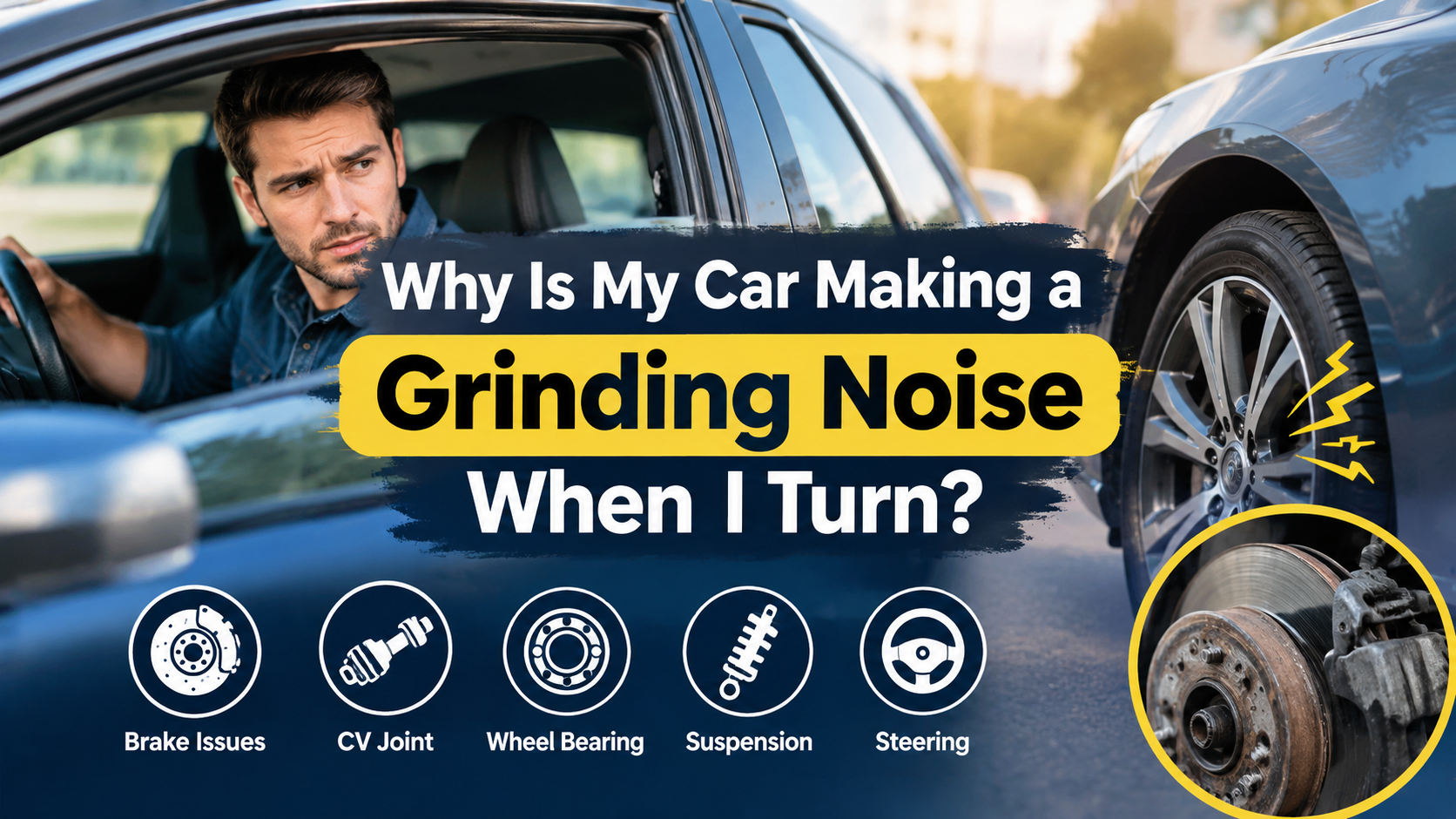
A car making a grinding noise when I turn may have a worn CV joint, bad brakes, a wheel bearing problem, or a part rubbing against the wheel. The sound cannot confirm the cause. Learn which clues matter, when to stop driving, and what to ask a mechanic to inspect.
What Causes a Grinding Noise When Turning?
The most common causes include:
- Worn CV joints or a damaged CV axle.
- Worn brake pads or damaged brake rotors.
- A failing wheel bearing.
- A bent brake dust shield.
- Worn steering or suspension components.
- A tire rubbing against the wheel arch or fender liner.
Do not assume that every grinding sound comes from the same component. Several problems can produce similar noises, so a proper inspection matters.
Worn CV Joint
A constant velocity (CV) joint transfers power from the drivetrain to the wheels while allowing them to move and turn. Front-wheel-drive vehicles commonly use CV joints on their drive axles.
When a CV joint wears out, you may hear clicking, popping, or grinding during tight turns. The sound may become more noticeable when you accelerate through a corner.
For more details about CV axle noise symptoms, see this CV shaft noise guide.
A damaged rubber CV boot can allow grease to escape and dirt to enter the joint. Look for grease splattered around the inside of the wheel, but avoid reaching under an unsupported vehicle.
A mechanic can inspect the boot, axle, and joint to determine whether the vehicle needs a new boot, joint, or complete CV axle.
Failing Wheel Bearing
A wheel bearing allows the wheel to rotate smoothly. Wear or internal damage can create a grinding, humming, rumbling, or growling sound.
A failing bearing may produce more noise as vehicle speed increases. The sound can also change during a turn because cornering shifts the load across the wheels.
Because several problems can produce similar sounds, read this guide to diagnosing a noisy wheel bearing for additional diagnostic information.
Other warning signs include wheel vibration, unusual looseness, or changes in handling. These symptoms can also indicate other mechanical problems, so a technician must check the wheel bearing before recommending replacement.
Worn Brake Pads or Damaged Rotors
Brake pads press against the rotors to slow the vehicle. When the friction material wears away, metal components may contact the rotor and produce a harsh grinding noise.
You may notice the sound most clearly when braking while turning. Damaged rotors, a sticking caliper, or loose brake hardware can also cause scraping or grinding.
Brake problems deserve prompt attention because they can reduce braking performance. If you hear persistent metal-on-metal grinding, avoid unnecessary driving and arrange a professional inspection.
Bent Brake Dust Shield
A brake dust shield sits behind the rotor and helps protect the brake assembly from debris. A bent shield or trapped stone can rub against the rotor and create a metallic scraping sound.
The noise may appear only during turns because steering and suspension movement can change the clearance between components.
A mechanic can inspect the shield and rotor area, remove trapped debris, and correct any contact. Do not reach near a hot rotor or attempt repairs without the proper equipment.
Steering or Suspension Problems
Steering and suspension components help control wheel movement and vehicle direction. Worn strut mount bearings, ball joints, or other damaged parts may create grinding, creaking, popping, or clunking sounds during steering.
Pay attention if the steering wheel feels unusually stiff, the car pulls to one side, or you notice excessive vibration. These symptoms can indicate a safety-related problem.
Arrange an inspection promptly, especially if the noise occurs alongside changes in steering response or vehicle stability.
Tire Rubbing Against the Fender Liner
A tire can rub against the fender liner or another nearby component when you turn. This may happen after installing oversized tires, changing wheel dimensions, damaging a liner, or loosening a component.
The sound often appears during sharp turns or when the suspension compresses over bumps. A mechanic can check tire clearance, wheel fitment, and surrounding components.
You should also check your recommended tire pressure to help maintain proper tire performance and handling.
Do not ignore repeated rubbing. Continued contact can damage the tire or nearby parts.
What Does the Grinding Noise Tell You?
The conditions that trigger the noise can help narrow down the possible cause. However, no single sound pattern confirms a failed part.
Grinding When Turning Left or Right
If your car makes a grinding noise when turning left, right, or both ways, note which direction triggers the sound and whether the noise changes with speed.
A wheel bearing may become louder as cornering changes the load on it. A worn CV joint may click or pop during tight turns. Brake shields and tires can also rub as the wheels change position.
Turning direction alone cannot reliably identify which component or side has failed. Ask a mechanic to inspect both sides where appropriate.
Grinding at Low Speeds
A grinding noise at low speed may come from a CV joint, brake component, dust shield, tire contact, or steering and suspension part.
Notice whether the sound occurs during parking, U-turns, or sharp corners. If it appears only when you press the brake pedal, the brake system deserves particular attention.
Grinding While Turning the Steering Wheel When Parked
If the noise occurs while the car remains stationary, a mechanic may need to inspect the steering system, strut mount bearings, and related suspension components.
This symptom differs from a noise that occurs only when the wheels rotate. Tell the mechanic whether the engine is running, whether the vehicle is moving, and whether the sound occurs when turning the steering wheel in either direction.
How to Tell Whether It’s a Wheel Bearing, CV Joint, or Brakes
Use the following table to organize your observations before arranging an inspection.
Is It Safe to Drive With a Grinding Noise When Turning?
A grinding noise can signal a problem that affects braking, wheel control, or steering. The safest response depends on the severity of the sound and any other symptoms.
Stop driving as soon as you can do so safely if you notice any of the following:
- The brakes feel weak or the pedal behaves unusually.
- The steering suddenly becomes stiff or difficult to control.
- The wheel shakes excessively or the vehicle becomes unstable.
- You hear severe, continuous grinding or notice smoke or a burning smell.
- A wheel appears loose or the vehicle pulls sharply to one side.
Arrange roadside assistance or towing if the vehicle may be unsafe. If the grinding is mild and the car still appears to operate normally, arrange an inspection promptly and avoid unnecessary trips until a professional assesses it.
If you notice a dashboard oil warning, learn what the car oil light means and what to do next.
How Do Mechanics Diagnose a Grinding Noise When Turning?
A mechanic typically starts by asking when the sound occurs, how fast the vehicle travels, whether braking changes the noise, and whether the driver notices vibration or handling problems.
The inspection may include:
- Checking brake pads, rotors, calipers, and dust shields.
- Inspecting CV boots, axle joints, and nearby components.
- Checking wheel bearings for noise, roughness, or excessive play.
- Examining tires, wheel clearance, and suspension parts.
- Conducting an appropriate road test when safe.
These checks help prevent unnecessary part replacement. A grinding sound alone does not prove that a particular bearing, axle, or brake component has failed.
For another common vehicle diagnostic issue, read our guide to the P0128 code.
How Much Does It Cost to Fix a Grinding Noise When Turning?
Repair costs depend on the failed component, vehicle model, parts availability, labor rates, and the extent of the damage.
A loose dust shield may require a relatively simple adjustment, while a damaged wheel bearing, CV axle, or brake assembly can require more extensive work. Delaying brake repairs may also allow additional damage to develop.
Ask the repair shop to provide a diagnosis and an itemized estimate covering parts, labor, and any related damage. Compare estimates based on the same repair scope rather than choosing a workshop on price alone.
Symptom Comparison Table
| Symptom | Possible cause | Recommended action |
|---|---|---|
| Grinding mainly while braking | Worn pads, damaged rotors, or brake hardware | Arrange a prompt brake inspection |
| Clicking or popping on tight turns | Worn CV joint | Have the axle and joint checked |
| Humming or growling that changes with speed | Wheel bearing or another rotating component | Arrange a wheel-end inspection |
| Metallic scraping during turns | Dust shield, trapped debris, or rubbing parts | Have the wheel and brake area checked |
| Grinding while steering when parked | Steering or suspension component | Arrange a steering inspection |
| Rubbing during sharp turns | Tire or fender-liner contact | Check tire clearance and fitment |
Thinking about your next vehicle? Compare electric vs. hybrid cars to understand the key differences.
Conclusion: Get the Grinding Noise Checked
A car making a grinding noise when I turn may have a worn CV joint, damaged brakes, a failing wheel bearing, or rubbing between nearby components. The timing, sound, speed, and steering conditions can help narrow down the cause, but they cannot confirm it. Pay attention to changes in braking, steering, and vehicle stability. Stop driving if the car feels unsafe, and arrange a professional inspection before a minor issue becomes a more serious repair.
Frequently Asked Questions
1. Why is my car making a grinding noise when I turn?
Your car may have a worn CV joint, damaged brakes, a failing wheel bearing, or a part rubbing against the wheel. Notice whether the sound occurs during braking, tight turns, or normal driving. These details help a mechanic narrow down the cause, but a physical inspection is necessary to confirm the problem.
2. Is it safe to drive with a grinding noise when turning?
Driving may be unsafe if the noise comes from damaged brakes, a severely worn wheel bearing, or a steering problem. Stop when safe if you notice weak braking, difficult steering, severe vibration, smoke, or unstable handling. Arrange towing if you suspect a serious fault rather than risking further damage.
3. Can a bad CV joint cause grinding when turning?
Yes, a worn CV joint can create clicking, popping, or other noises during tight turns, especially when accelerating. A torn CV boot may allow grease to escape and dirt to enter the joint. However, wheel bearings and brake components can produce similar sounds, so a mechanic should confirm the cause.
4. Can a wheel bearing make a grinding noise when turning?
Yes, a damaged wheel bearing can create grinding, humming, rumbling, or growling that changes with vehicle speed or cornering. Some failures also cause vibration or wheel looseness. These symptoms do not prove the bearing has failed, so a technician should inspect the wheel-end assembly and rule out other possible sources.
5. Why does my car grind when turning left but not right?
The noise may change because turning shifts the load across the wheels or changes the clearance between nearby components. A wheel bearing, CV joint, brake shield, or tire contact could contribute. The direction alone cannot reliably identify the faulty side, so ask a mechanic to inspect the relevant components.
6. Can worn brake pads cause grinding when turning?
Yes, severely worn brake pads can allow metal components to grind against the rotor. The sound may become more noticeable when braking during a turn. Damaged rotors, sticking calipers, or loose brake hardware can also contribute. Arrange a prompt brake inspection, particularly if braking performance changes or the grinding persists.
7. Why does my car grind when turning at low speeds?
Low-speed grinding can come from a CV joint, brake hardware, a bent dust shield, tire rubbing, or steering and suspension components. Notice whether the sound occurs during parking, sharp turns, or braking. Share these details with a mechanic instead of assuming the noise points to one specific part.
8. Why does my car make a grinding noise when I turn the steering wheel while parked?
A noise while steering a stationary car may involve a strut mount bearing, steering component, or related suspension part. It differs from grinding caused by a rotating wheel or axle. Tell the mechanic whether the engine is running and whether the noise occurs throughout the steering movement or only at certain angles.
9. Can a bent brake dust shield cause grinding only during turns?
Yes, a bent brake dust shield can contact the rotor as wheel or suspension movement changes the clearance. A small stone trapped near the rotor may also cause metallic scraping. A mechanic can inspect the area and correct the contact. Avoid touching brake components because they may remain hot after driving.
10. How much does it cost to repair a grinding noise when turning?
The price depends on the actual fault, vehicle, parts, and labor rates. Adjusting a dust shield may cost less than replacing a wheel bearing, CV axle, or brake assembly. Request an itemized estimate after diagnosis, and ask whether the noise has caused damage to other components before approving the repair.