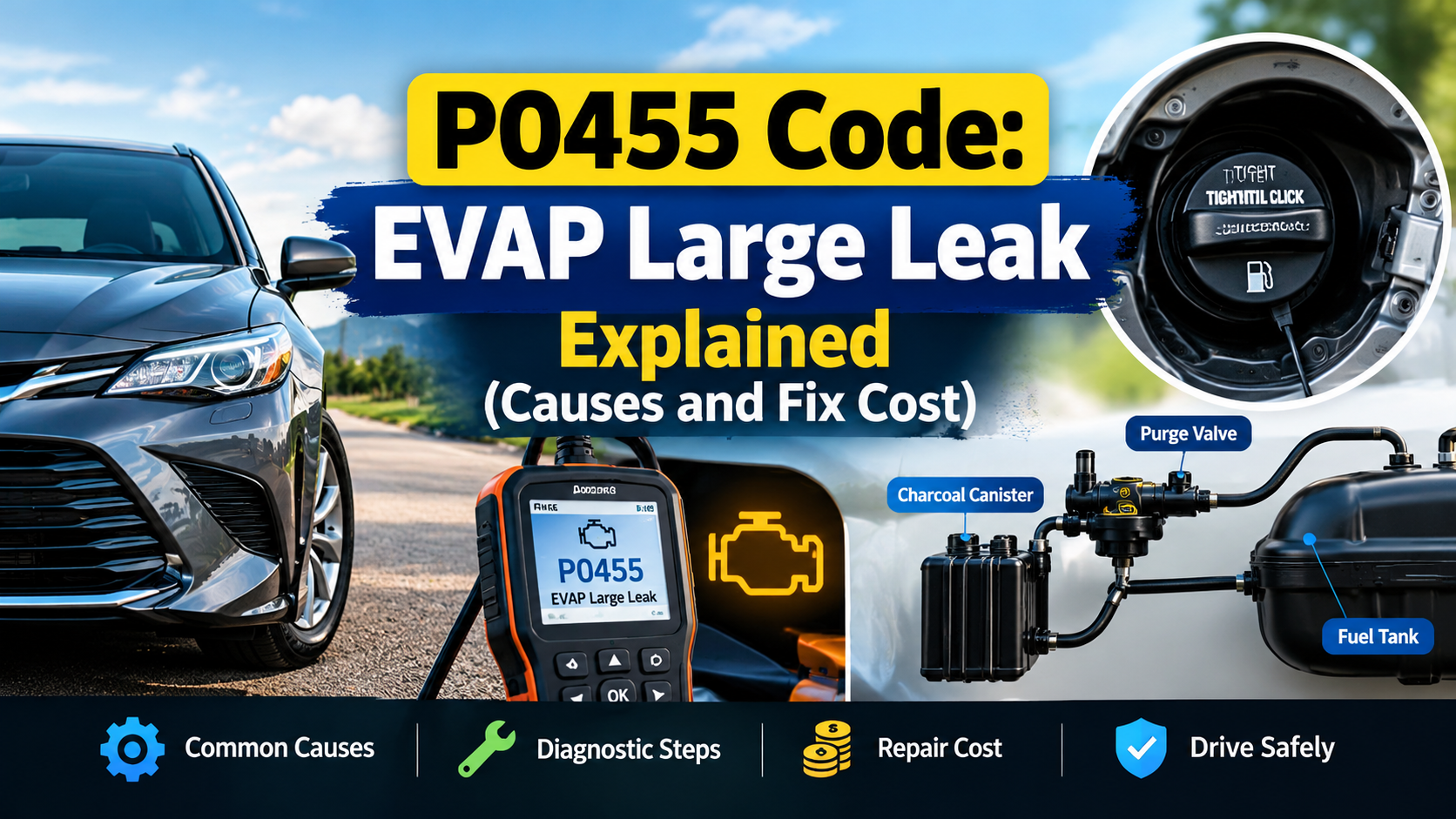
The P0455 code means your vehicle’s onboard diagnostic system has detected a large leak or a related fault in the EVAP system, which controls fuel vapors. Common causes include a loose gas cap, disconnected hose, faulty valve, or damaged charcoal canister. Repair costs depend on the confirmed cause, vehicle, parts, and labor.
What Does the P0455 Code Mean?
The P0455 code is an OBD-II diagnostic trouble code that indicates a large leak detected in the evaporative emission control system. Some vehicle-specific diagnostic strategies can also associate this code with a purge-flow problem.
The EVAP system captures fuel vapors from the tank and directs them into the engine to burn under the right conditions. It uses hoses, valves, a charcoal canister, and sensors to control those vapors.
When the system cannot maintain the expected sealed condition, the vehicle’s computer may turn on the Check Engine Light. The code identifies a detected problem, not necessarily the exact part that failed.
Common P0455 Code Symptoms
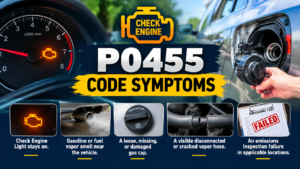
The symptoms vary by vehicle and by the location of the fault. Some drivers notice only a warning light.
- Check Engine Light stays on.
- Gasoline or fuel vapor smell near the vehicle.
- A loose, missing, or damaged gas cap.
- A visible disconnected or cracked vapor hose.
- An emissions inspection failure in applicable locations.
The engine may run normally because the EVAP system mainly controls fuel vapor emissions. However, normal driving performance does not prove that the system is healthy.
If you smell strong gasoline fumes or see liquid fuel leaking, stop driving, avoid flames or sparks, and arrange a safe professional inspection.
What Causes the P0455 Code?
Loose or Damaged Gas Cap
A loose, missing, incorrect, or damaged gas cap can prevent the fuel system from sealing properly. Check that the cap fits correctly and that its rubber seal has no cracks or visible damage. Some vehicles use capless fuel fillers, so follow the manufacturer’s inspection instructions for those systems.
Cracked or Disconnected EVAP Hoses
Rubber hoses and vapor lines can crack, disconnect, or suffer damage from heat, age, road debris, or previous repairs. A disconnected line can create a large leak. Look for accessible damage, but do not crawl under a vehicle supported only by a jack.
Faulty EVAP Purge or Vent Valve
The purge valve controls vapor flow toward the engine, while the vent valve helps manage airflow through the EVAP system. A valve that sticks or fails to seal can interfere with the system’s leak test. A technician should test the component before replacing it.
Damaged Charcoal Canister
The charcoal canister stores fuel vapors until the engine can burn them. Cracks, damaged connections, or contamination can affect its operation. A technician should confirm the fault before recommending replacement.
Fuel Filler Neck, Tank, or Sensor Problems
Corrosion, physical damage, leaking seals, or a faulty fuel tank pressure sensor can also contribute to the code. These faults may require specialized testing because some components sit underneath the vehicle or near the fuel tank.
How to Diagnose a P0455 Code
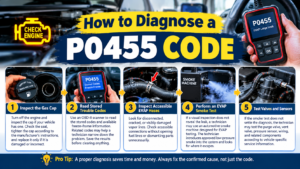
Step 1: Inspect the Gas Cap
Turn off the engine and inspect the cap if your vehicle has one. Check the seal, tighten the cap according to the manufacturer’s instructions, and replace it only if it is damaged or incorrect.
Step 2: Read Stored Trouble Codes
Use an OBD-II scanner to read the stored codes and available freeze-frame information. Related codes may help a technician narrow down the problem. Save the results before clearing anything.
Step 3: Inspect Accessible EVAP Hoses
Look for disconnected, cracked, or visibly damaged vapor lines. Check accessible connections without opening fuel lines or dismantling parts unnecessarily.
Step 4: Perform an EVAP Smoke Test
If a visual inspection does not reveal the leak, a technician may use an automotive smoke machine designed for EVAP testing. The technician introduces approved low-pressure smoke into the system and looks for where it escapes.
Step 5: Test Valves and Sensors
If the smoke test does not settle the diagnosis, the technician may test the purge valve, vent valve, pressure sensor, wiring, and related components according to vehicle-specific service information.
For additional guidance on diagnosing an EVAP system leak, read this guide to the P0455 EVAP large leak. It explains common causes and diagnostic considerations that can help you understand why the code appears and why confirming the faulty component is important before replacing parts.
How Much Does It Cost to Fix P0455?
The P0455 repair cost depends on the failed component, vehicle design, parts availability, and local labor rates. The following figures are approximate US-dollar estimates, not guaranteed quotes.
| Repair or service | Estimated cost |
|---|---|
| Replacement gas cap | $5–$15 |
| EVAP hose repair or replacement | $75–$200 |
| EVAP vent valve replacement | $100–$250 |
| Fuel tank pressure sensor replacement | $150–$350 |
| Charcoal canister replacement | $200–$400 |
| Fuel filler neck replacement | $200–$500 |
| EVAP smoke-test diagnosis | $60–$150 |
These indicative ranges come from a published automotive repair guide and may differ from current local quotes.
Ask the repair shop whether its estimate includes diagnostic labor, parts, installation, taxes, and any additional testing. A simple gas cap issue may cost very little, while a damaged component or difficult-to-access leak can cost considerably more.
How to Fix a P0455 Code
Match the Repair to the Confirmed Fault
Choose the repair only after testing identifies the problem. Depending on the diagnosis, the fix may involve tightening or replacing a gas cap, reconnecting a hose, replacing a damaged vapor line, or repairing a failed valve or canister.
Avoid replacing several parts based on the code alone. That approach can increase the bill without resolving the leak.
Clear the Code and Verify the Repair
After the repair, a technician can clear the code and run the required diagnostic checks. Some vehicles need specific driving conditions before the EVAP monitor completes its self-test. The Check Engine Light may not turn off immediately.
Can You Drive With a P0455 Code?
A P0455 code alone often does not affect engine performance, but you should arrange a diagnosis soon. The vehicle may release fuel vapors, and an illuminated Check Engine Light can make it harder to notice a new warning.
Do not continue driving if you notice a strong fuel smell, visible fuel leakage, or another serious warning sign. Move away from ignition sources and seek professional assistance.
P0455 vs. P0442 vs. P0456 vs. P0457
| Code | General meaning |
|---|---|
| P0455 | Large EVAP leak detected |
| P0442 | Small EVAP leak detected |
| P0456 | Very small EVAP leak detected |
| P0457 | EVAP leak associated with the fuel cap or fuel-filler system, depending on the vehicle |
These codes help describe the type of EVAP fault the computer detected. Their exact diagnostic criteria can vary by manufacturer, so check vehicle-specific service information before deciding which component to test.
Different OBD-II trouble codes point to different vehicle problems. For example, the P0128 code relates to engine coolant temperature and thermostat performance, while P0455 generally indicates a large EVAP system leak. Understanding the difference helps you identify which system needs diagnosis before replacing any parts.
Can P0455 Cause an Emissions Test Failure?
Yes, the code can cause an emissions inspection failure in jurisdictions that check diagnostic trouble codes or require the EVAP monitor to be ready. Requirements vary by state and inspection program.
Fix the underlying problem before the inspection. Clearing the code without completing the repair may not solve the issue, and the vehicle may need to complete its required drive cycle before the monitor reports readiness.
Conclusion: Fix the Cause, Not Just the Code
The P0455 code points to a fault in the EVAP system, but it does not identify the failed part. Start with the gas cap and vapor hoses, then use a scan tool and smoke test if necessary. Repair the confirmed cause rather than replacing parts at random. Compare the estimate for parts, labor, and diagnosis, and verify the repair afterward. If you notice a strong fuel smell or liquid fuel, stop driving and seek help.
Frequently Asked Questions
1. What does the P0455 code mean?
The P0455 code generally means the vehicle’s diagnostic system has detected a large leak in the evaporative emission control system. The system captures fuel vapors instead of releasing them directly into the air. The code points to a system fault, but additional testing must identify the actual cause.
2. Can a loose gas cap cause P0455?
Yes, a loose, missing, or damaged gas cap can cause P0455 because it may prevent the fuel vapor system from sealing properly. Check the cap and its seal before buying replacement parts. If your vehicle uses a capless filler, inspect it according to the manufacturer’s instructions.
3. How much does it cost to fix P0455?
The cost depends on the failed part and the labor required. A replacement gas cap may cost only a few dollars, while a valve, sensor, or canister repair can cost hundreds. Ask for a diagnosis and a written estimate that separates parts, labor, and testing fees.
4. Can you drive with P0455 code?
You can often drive a short distance if the code appears alone and the vehicle shows no other warning signs. However, arrange an inspection soon because fuel vapors may escape. If you notice a strong gasoline smell or visible fuel leakage, stop driving and seek professional help.
5. How do you fix a P0455 code?
The correct fix depends on the confirmed cause. A technician may tighten or replace the gas cap, repair a disconnected hose, or replace a faulty valve or damaged canister. A smoke test can help locate hidden leaks. Clear the code only after addressing the fault, then verify the repair.
6. Can P0455 clear itself?
The Check Engine Light may turn off after the vehicle completes successful diagnostic checks, depending on its control strategy. However, a light turning off does not always prove that the underlying problem has disappeared. Read the stored codes and confirm that the EVAP monitor completes successfully after repairs.
7. What is the difference between P0455 and P0456?
P0455 generally indicates a large EVAP leak, while P0456 indicates a very small leak. Both codes concern fuel vapor containment, but the diagnostic thresholds and testing strategies vary by vehicle. A smoke test and vehicle-specific service information can help locate the source rather than relying on the code alone.
8. Can P0455 cause an emissions test failure?
Yes, P0455 can lead to an emissions inspection failure when the inspection program checks the Check Engine Light, stored trouble codes, or EVAP monitor readiness. The exact rules depend on the jurisdiction. Repair the underlying fault and allow the required diagnostic monitor to complete before retesting.
9. Does P0455 affect fuel economy?
P0455 does not automatically cause noticeable fuel economy problems because the EVAP system primarily controls fuel vapors. However, the underlying fault or a related purge-system problem may affect vehicle operation in some cases. Diagnose the code instead of assuming that every vehicle will experience the same symptoms.
10. How long does it take to repair P0455?
Repair time depends on where the leak occurs and how easily the technician can reach it. Checking a gas cap may take only minutes, while finding a hidden leak or replacing an inaccessible component may take longer. Ask the shop for a time estimate after it completes the initial diagnosis.