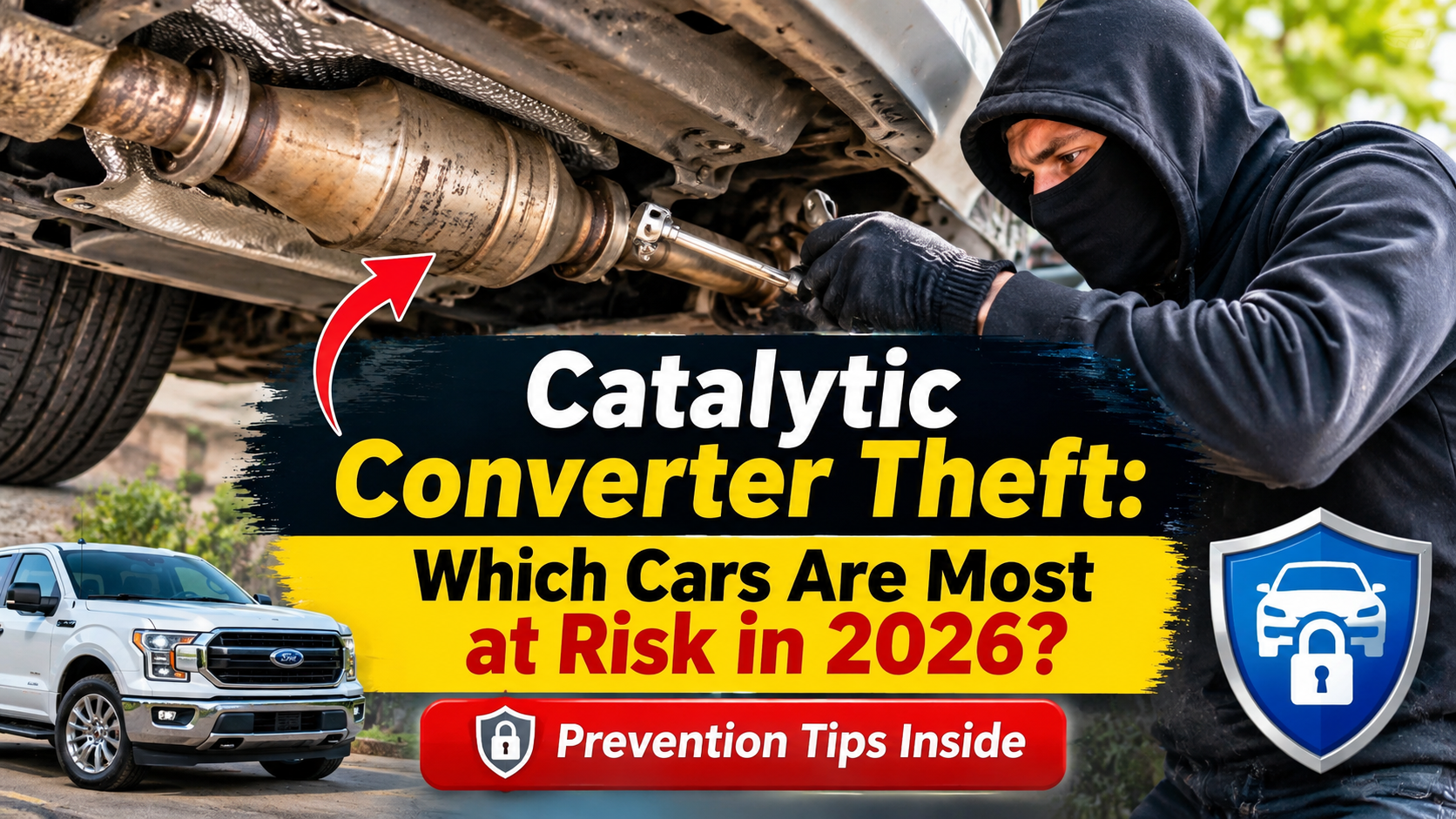
Catalytic converter theft remains a concern for US vehicle owners in 2026. According to CARFAX’s June 2026 data, the Ford F-150, Hyundai Tucson and Ford Explorer lead the nationwide list of targeted vehicles. Owners can reduce theft risk with protective shields, secure parking, security alarms and VIN engraving.
Why Catalytic Converter Theft Matters in 2026
Catalytic converter theft can leave drivers with a damaged exhaust system, an unexpected repair bill, and a vehicle they cannot safely use. In 2026, CARFAX data identified the Ford F-150, Hyundai Tucson, and Ford Explorer among the most targeted models nationwide. Here is what owners should know and do today.
What Is a Catalytic Converter and Why Is It Stolen?
A catalytic converter is part of a vehicle’s exhaust system. It reduces harmful emissions before exhaust gases leave the tailpipe. Without it, a vehicle can produce excessive noise and fail emissions requirements.
Thieves target catalytic converters because they contain valuable precious metals, including platinum, palladium, and rhodium. They can sell stolen converters for scrap, although the amount they receive depends on the converter and market conditions.
Removing one can take only a few minutes with the right tools. That makes unattended vehicles attractive targets, especially in poorly lit parking areas.
Which Cars Are Most Targeted for Catalytic Converter Theft in 2026?
CARFAX published its latest nationwide list on June 10, 2026. Its data estimates that more than 137,000 catalytic converters were stolen in the United States during 2025.
The nationwide ranking also highlights how popular pickups and SUVs remain attractive targets for thieves. CARFAX’s catalytic converter theft report provides the latest vehicle rankings, theft figures, and information about the factors that make certain models more vulnerable.
| Rank | Vehicle | Type |
|---|---|---|
| 1 | Ford F-150 | Pickup truck |
| 2 | Hyundai Tucson | SUV |
| 3 | Ford Explorer | SUV |
| 4 | Ram 2500 | Heavy-duty pickup |
| 5 | Chevrolet Silverado | Pickup truck |
| 6 | Chevrolet Traverse | SUV |
| 7 | Ram 3500 | Heavy-duty pickup |
| 8 | Ford EcoSport | SUV |
| 9 | Ford Expedition | SUV |
| 10 | Chevrolet Trax | SUV |
Why Are Pickup Trucks and SUVs Common Targets?
Many pickups and SUVs sit higher off the ground than passenger cars. This can give thieves easier access to the exhaust system. However, ground clearance does not tell the whole story. Converter location, vehicle design, parking conditions, and local theft activity also affect risk.
Are Hybrid Cars Still at Risk?
Yes. Hybrid vehicles can also attract thieves. State Farm identifies the Toyota Prius among models that have faced catalytic converter theft. Some hybrid converters may contain more valuable amounts of precious metals than certain conventional converters. However, theft risk varies by model, age, design, and location. The Toyota Prius is not included in CARFAX’s 2026 nationwide top 10 list, so do not confuse historical risk with the latest ranking.
Hybrid and electric vehicles have different powertrain designs and maintenance requirements. Unlike fully electric vehicles, hybrids use a gasoline engine alongside an electric motor. Understanding the differences between electric and hybrid vehicles can help owners make better decisions about vehicle maintenance, running costs, and long-term ownership.
Why Are Some Vehicles More Vulnerable to Catalytic Converter Theft?
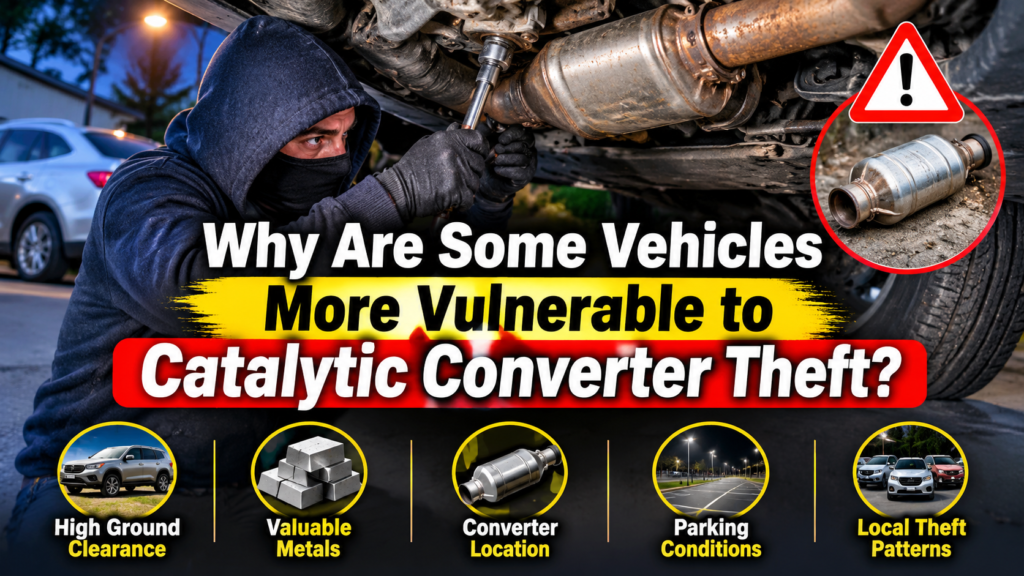
Several factors can make a vehicle easier or more attractive to target.
- High ground clearance: Thieves may have more room to access the exhaust system.
- Valuable metals: Platinum, palladium, and rhodium create a resale incentive.
- Converter location: Some designs make the component easier to reach.
- Parking conditions: Isolated, poorly lit areas give thieves more opportunity.
- Local theft patterns: Certain models may attract more attention in particular communities.
Owning a listed vehicle does not mean theft is inevitable. A vehicle outside the top 10 can also be targeted.
How to Prevent Catalytic Converter Theft
Good security habits can make your vehicle a less convenient target. Combining physical protection with safer parking provides a stronger approach than relying on one measure.
Park in a Secure Location
Use a locked garage whenever possible. If you park outside, choose a well-lit area with regular activity or security cameras. At home, motion-activated lights can improve visibility around your driveway.
Install a Catalytic Converter Shield
A properly fitted catalytic converter shield covers the component and makes access more difficult. Ask a qualified mechanic or dealership to recommend a compatible option for your vehicle.
Use a Vibration-Sensitive Alarm
Some vehicle alarms can detect unusual vibration or movement. A properly configured system may alert you when someone attempts to work underneath your vehicle.
Mark the Converter With Your VIN
Ask a mechanic or local vehicle-theft prevention program about VIN engraving or etching. Identification can help connect a recovered converter to its vehicle and may discourage resale.
Choose Safer Parking Positions
Avoid isolated parking spaces when possible. Parking near a wall, fence, or other barrier may make access to the exhaust system more difficult, depending on the vehicle’s layout.
Best Catalytic Converter Anti-Theft Devices
Different devices offer different levels of physical protection and detection.
| Protection method | Main purpose | Important consideration |
|---|---|---|
| Catalytic converter shield | Blocks quick access | Must fit the vehicle |
| Metal cage | Adds a physical barrier | Requires secure installation |
| Security clamp or cable | Makes removal harder | Compatibility matters |
| Vibration-sensitive alarm | Detects suspicious movement | Correct calibration is important |
| VIN engraving | Improves identification | Does not physically prevent removal |
No catalytic converter anti-theft device guarantees complete protection. Ask a qualified installer to check compatibility and avoid modifications that could damage the exhaust system.
How Much Does Catalytic Converter Replacement Cost?
Catalytic converter replacement cost depends on the vehicle, part availability, labor rates, and additional exhaust damage. CARFAX notes that replacement expenses can reach $3,000, although the actual bill can be lower or higher depending on the vehicle and repair requirements.
Before approving work, request an itemized estimate covering:
- Replacement catalytic converter
- Exhaust pipes and related components
- Labor charges
- Sensors or wiring repairs, if needed
- Any required emissions-related work
Choose a reputable repair shop and make sure the replacement part meets applicable emissions requirements.
Does Car Insurance Cover Catalytic Converter Theft?
Comprehensive coverage may cover catalytic converter theft, depending on your policy. Liability-only coverage generally does not pay for theft damage to your own vehicle.
Your deductible also matters. If the repair bill is close to or below your deductible, filing a claim may not provide much financial benefit. Contact your insurer to confirm coverage, deductible requirements, documentation, and approved repair procedures before arranging repairs.
Signs Your Catalytic Converter Has Been Stolen
A missing converter often creates noticeable changes.
- Extremely loud exhaust: The engine may sound much louder than usual.
- Unusual exhaust smell: You may notice stronger exhaust odors.
- Visible damage: Parts of the exhaust pipe may appear cut or disconnected.
- Warning lights: The Check Engine Light may appear after the theft.
If you suspect theft, avoid driving the vehicle until a mechanic checks it. Exhaust gases and noise can create safety and legal concerns.
What Should You Do If Your Catalytic Converter Is Stolen?
Take these steps if you discover that the component is missing:
- Avoid driving: Arrange a tow or professional inspection if necessary.
- Contact the police: Report the theft and obtain a report number.
- Document the damage: Photograph the exhaust area and visible damage.
- Notify your insurer: Ask about comprehensive coverage and claim requirements.
- Visit a qualified mechanic: Get an inspection and itemized replacement estimate.
Keep copies of the police report, repair estimate, photographs, and insurance correspondence.
Conclusion: Protect Your Vehicle From Catalytic Converter Theft
Catalytic converter theft affects many vehicle types, but CARFAX’s 2026 list highlights several pickups and SUVs that owners should watch closely. A vehicle’s position on that list does not guarantee it will be targeted, and other models can also be vulnerable. Secure parking, a properly fitted shield, an alarm, and VIN marking can make theft harder. Check your insurance policy, know the warning signs, and report any theft promptly before arranging a professional replacement service.
Frequently Asked Questions
Which cars are most targeted for catalytic converter theft in 2026?
According to CARFAX’s June 2026 nationwide list, the Ford F-150 ranks first, followed by the Hyundai Tucson and Ford Explorer. The list also includes the Ram 2500, Chevrolet Silverado, Chevrolet Traverse, Ram 3500, Ford EcoSport, Ford Expedition, and Chevrolet Trax.
What vehicles are least likely to have their catalytic converter stolen?
There is no reliable universal list of vehicles that are completely safe from catalytic converter theft. Risk depends on vehicle design, converter location, parking conditions, and local theft patterns. A model missing from CARFAX’s top 10 list can still become a target.
Why are Toyota Prius catalytic converters targeted?
Some Toyota Prius models attract thieves because their catalytic converters contain valuable precious metals. Hybrid operating patterns may also affect converter wear. However, risk varies by generation, location, and vehicle condition. Owners should ask a Toyota dealership about compatible protection options.
How can I prevent catalytic converter theft?
Park inside a locked garage whenever possible. Otherwise, choose a visible, well-lit location. Consider installing a compatible catalytic converter shield, setting up a vibration-sensitive alarm, and marking the converter with your VIN. Combining these measures makes theft more difficult but cannot eliminate the risk.
Do catalytic converter shields really work?
Catalytic converter shields can make removal more difficult by adding a physical barrier around the component. Their effectiveness depends on the design, material, and installation quality. Choose a vehicle-compatible product and have a qualified professional install it without damaging the exhaust system.
Does car insurance cover catalytic converter theft?
Comprehensive auto insurance may cover catalytic converter theft, subject to your policy terms and deductible. Liability-only insurance generally does not cover theft damage to your own vehicle. Contact your insurer to confirm coverage and understand the documentation required before submitting a claim.
How much does catalytic converter replacement cost?
Replacement costs vary by vehicle, part type, labor, and additional exhaust damage. CARFAX reports that expenses can reach $3,000. Ask a repair shop for an itemized estimate before approving work, and confirm that the replacement component meets applicable emissions requirements.
Can I drive without a catalytic converter?
Driving without a catalytic converter is not advisable. The vehicle may produce excessive exhaust noise, release more harmful emissions, and fail an emissions inspection. Applicable laws also restrict operating vehicles without required emissions equipment. Arrange a professional inspection and repair instead.
Are SUVs more vulnerable to catalytic converter theft?
Some SUVs have higher ground clearance, which can make their catalytic converters easier to access. However, not every SUV has the same risk. Converter placement, vehicle design, local theft patterns, and parking conditions all influence how attractive a particular vehicle may be to thieves.
Can VIN engraving prevent catalytic converter theft?
VIN engraving cannot physically stop someone from removing a catalytic converter. However, it can make identification easier if authorities recover the component and may discourage resale. Combine identification marking with secure parking, an appropriate protective shield, and a suitable vehicle alarm.