After leaving the garage, you were happy that you had fresh oil, a new sticker on the windshield, and a clean receipt. Ten minutes later, the car oil light comes back on.
The positive side is that a car oil light after a service typically means there are few reasons for it, and most are inexpensive to address. The negative part is that one reason can ruin the engine within minutes.
Key Takeaways
- Red color indicates oil pressure is low. Stop the engine when it is safe to do so. The yellow or amber light is normally a service reminder or a level indicator.
- In most cases after servicing, the problem is either a missed reset, wrong oil level, loose filter, or sensor problem.
- Resetting the oil light is just clearing a service reminder. It does not repair any pressure problem.
- A blinking car oil light or an oil light together with the check engine light requires immediate inspection.
- It is possible that consumer rights and warranties can cover any mistake made during the service.
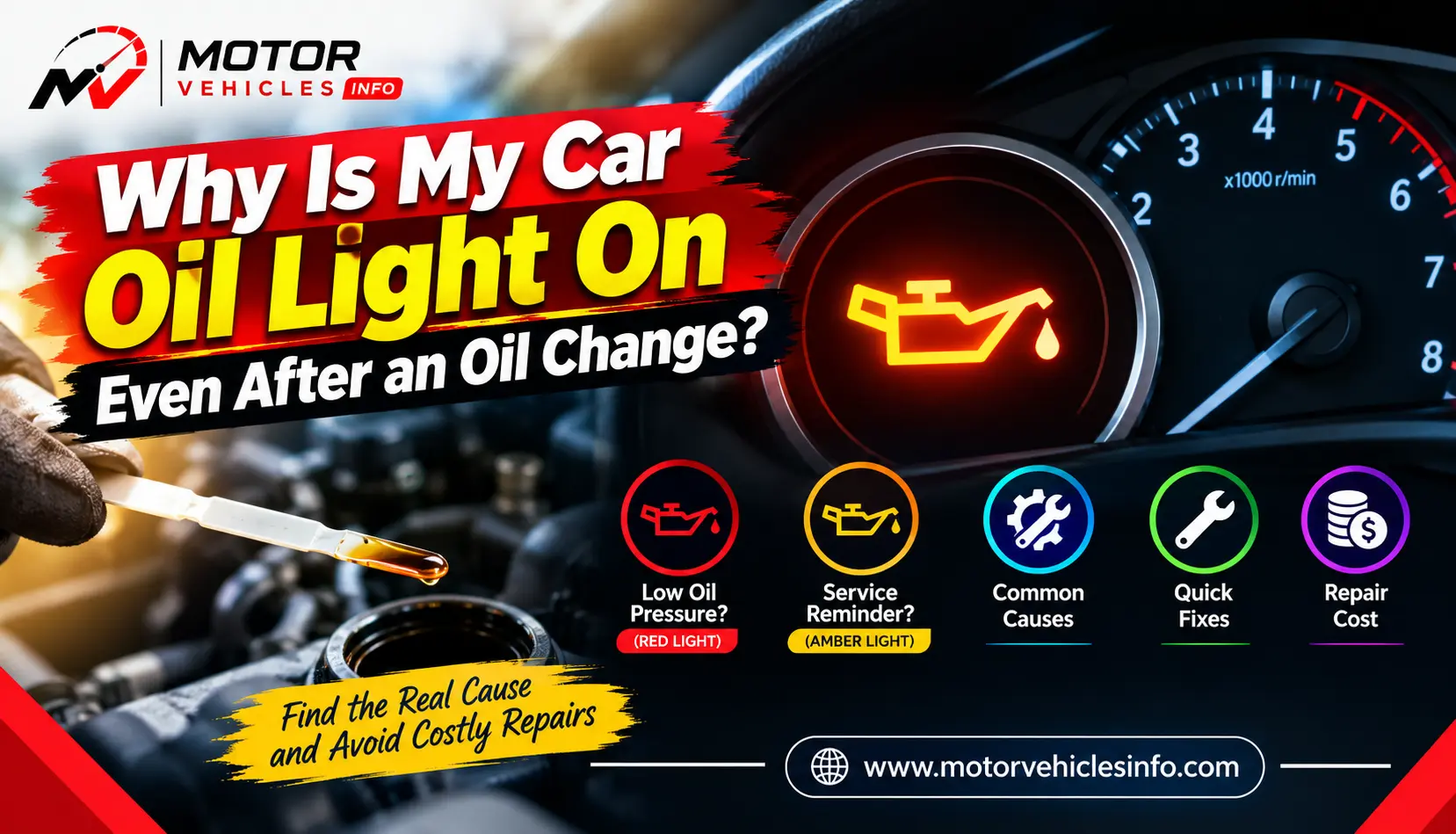
Which Car Oil Light Is On? Red Oil Pressure Light vs. Yellow Maintenance Reminder
Not every car oil light carries the same message. Color is your first clue, much like a traffic signal.
The Red Oil Light: Low Oil Pressure
A red oil can symbol, often with a small drip, warns that engine oil pressure has dropped. AAA’s warning light guide says a lit red oil can means pressure is too low, and that driving this way can destroy an engine quickly. Pressure pushes oil to the bearings, so a red oil light is a “right now” problem.
Fresh oil cannot cure a failed pump or a bad sensor, so a red car oil light can survive a perfect service.
The Yellow or Amber Oil Light: Reminder or Level Warning
An amber oil light, a wrench icon, or the words “Service due” or “Maintenance required” is a different message. On most cars, it is a mileage or time reminder that the shop forgot to reset. On some models, amber means the oil level is low.
Amber is less urgent, but check the dipstick the same day.
Quick Comparison: Which Oil Light Do You Have?
| Light | Usual meaning | Urgency | First action |
| Solid red oil can | Low oil pressure | Stop now | Pull over, switch off, check level |
| Blinking red oil light | Severe pressure loss | Stop now | Do not restart; call for a tow |
| Amber oil light | Low level or sensor warning | Same day | Check dipstick, top up |
| Spanner or “Service due” | Maintenance reminder | Low | Confirm oil, reset the reminder |
Can You Keep Driving With the Oil Light On? What to Do in the First 5 Minutes
If the oil light is red, the response would be negative. A lack of oil for a few minutes is enough to damage the engine irreparably. If the indicator is yellow, it means that one may go somewhere gently and check.
Do these actions during the first five minutes:
- Turn on the signal and slow down; stop in a secure place on flat ground.
- Shut off the engine and turn on the hazard lights.
- Wait five to ten minutes until all the oil returns to the oil pan.
- Pull out the dipstick, wipe it, and insert it back into place; read off the mark.
- Examine your car from the bottom and surroundings for oil traces.
Add the right type of oil gradually and check again if necessary. In case there is sufficient oil but the red indicator is still on, call a tow truck.
Expert tip: Keep a quart of the correct oil in the trunk. It beats a tow bill.
7 Reasons Your Oil Light Is Still On After an Oil Change
Most cases fall into one of seven groups. Start with the easy ones and work down.
1. The Service Reminder Was Never Reset: A Harmless Oil Light
This is the most common cause. The oil is fine, but the car still counts the old mileage until someone runs the reset routine.
2. The Wrong Oil Level Triggers the Car Oil Light
Too little oil starves the pump. Too much can whip into foam, which does not hold pressure well. Either mistake can wake the car oil light.
3. Wrong Oil Grade or Thin Oil
Oil that is too thin can drop pressure at hot idle, when a flickering oil light tends to appear. Match the grade in your owner’s manual.
4. A Faulty or Wrong Oil Filter
A filter with a stuck valve or poor fit can restrict flow. An old gasket left behind can cause a “double gasket” and a big leak.
5. A Leak From the Drain Plug or Filter
A loose plug, a worn crush washer, or an under-tightened filter will bleed oil fast. A leak turns a fresh service into a low oil light emergency.
6. A Faulty Sensor or Wiring: The False Oil Light
Sometimes the oil is perfect and the sensor is wrong. A bad pressure switch or damaged wire can trigger a false oil light.
7. A Real Pressure Problem Behind the Oil Light
A worn pump, clogged pickup screen, sludge, or worn bearings can all drop pressure. If the dipstick looks right and the light stays red, stop driving and get a pressure test.
Hidden Oil Change Mistakes That Trigger the Oil Light (Shop and DIY Errors)
Small slips cause many of these problems.
Shop Errors That Can Wake the Oil Light
- Overfilling or underfilling the engine
- Using the wrong viscosity or oil specification
- Installing the wrong filter, or leaving the old gasket stuck on the engine
- Cross-threading or under-tightening the filter or drain plug
- Skipping the service reminder reset
Whether it was a dealer, a quick-lube chain, or an independent shop, ask them to put it right.
DIY Errors That Trigger a Car Oil Light
Home mechanics forget to refill, pour in the wrong amount, or reuse a crush washer. While you are under the car, glance at the other fluids too. Our guide to transmission fluid change costs and intervals explains what healthy fluid looks like.
Pro tip: After a DIY change, run the engine 30 seconds, shut it off, then check for drips.
How to Reset the Oil Change Light (and Why a Reset Won’t Fix a Red Warning)
Learning how to reset the oil change light takes about a minute. The exact steps differ by make, so treat these as a general pattern and confirm them in your owner’s manual:
- Confirm the oil level and condition are correct first.
- Turn the ignition to “on” without starting the engine.
- Use the steering wheel buttons or the trip reset stalk to open the service menu.
- Select the oil life or service interval, then hold the reset option.
- Switch the ignition off, start the engine, and confirm the light is gone.
A reset only wipes a counter. It cannot cure a red car oil light, because that light is tied to a pressure sensor, not a calendar. If a red oil light returns after a reset, you have a real fault.
Why Is My Oil Light Blinking or Flickering? (Cold Start, Idle, Braking and Turns)
A blinking oil light is the engine asking for help. Where and when it blinks tells you a lot.
Blinking Oil Light on a Cold Start
Cold oil is thick and takes a moment to circulate. A flash that vanishes within a second or two may be normal. If the oil light stays on once the engine warms up, treat it as a fault.
Flickering Oil Light at Idle
A light that flickers when the engine is hot and idling often means borderline pressure. Thin oil, a tired pump, or worn bearings are common causes. If it fades as you rev, get the pressure tested.
Oil Light Flickering When Braking or Turning
When the oil pan runs low, oil can slosh away from the pickup during hard braking or sharp turns. A flickering oil light then usually means a low level. Check the dipstick.
When the Dash Flickers Everywhere
If several lights flicker together, think electrical, not oil. A weak alternator or battery can make gauges and lamps misbehave. Our comparison of alternator vs battery failure signs shows how to tell them apart.
Oil Light and Check Engine Light On Together: What It Means
Seeing the oil light and check engine light together is a bad sign. The engine computer may have logged low pressure or a sensor fault. Kelley Blue Book’s warning lights explainer notes that an oil light returning after you add oil points to a bigger problem, such as a leak or a failed pump.
The two may not be linked. A check engine light can come from something unrelated, such as the thermostat fault in our P0128 code explainer. Even so, the oil light takes priority.
How to Diagnose It at Home in 10 Minutes: Oil Level, Leaks, Sensor Clues and a Flowchart
Park on level ground, let the engine rest, and work through these checks.
Step 1: Check the Oil Level and Color
Read the dipstick twice. Between the marks is good. Milky oil or a gas smell needs a mechanic.
Step 2: Hunt for Leaks
Look under the engine, around the filter, and along the drain plug. Wet, shiny patches mean a leak.
Step 3: Read the Sensor Clues
An oil light that flicks on and off with no engine noise, normal level, and no leak often points to a sensor or wiring fault. Ticking or knocking points toward real pressure trouble. A basic OBD-II scanner can also show stored codes, as our P0455 code guide shows.
Step 4: Run Through the Flowchart
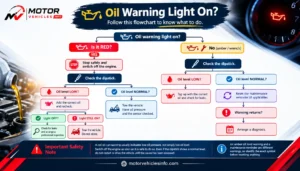
Step 5: Check for Recalls
If you buy, sell, or run VIN checks, look for open recalls too. NHTSA’s free recall lookup tool lets you search by VIN or license plate, and recall repairs are free at a franchised dealer.
Who Pays? What to Tell the Shop, Typical Repair Costs and Warranty Tips
Call the shop the same day, and stay calm and factual.
What to Tell the Shop
Give them clear details:
- The date, mileage, and time of the service
- Which oil light is on (red, amber, blinking) and when it appears
- What the dipstick shows and whether you added any oil
- Any drips, smells, or new noises
Ask them to re-check the level, filter, plug, and sensor connection.
Typical Repair Costs
These ballpark figures in US dollars vary by brand, region, and labor rates. Always get a written quote.
| Fix | Typical range |
| Tighten or replace plug or filter | $20 to $120 |
| Oil pressure sensor or switch | $80 to $300 |
| Gasket or seal leak repair | $150 to $800 |
| Oil pump replacement | $600 to $2,000+ |
| Engine repair or replacement after damage | $3,000 to $8,000+ |
Warranty and Consumer Rights
A service error is usually the shop’s job to fix. A failed pump may fall under a manufacturer or extended warranty.
In the US, the FTC explains that it is illegal for a dealer to deny warranty coverage just because someone else did your routine maintenance, oil changes included. The dealer must show that the improper work caused the damage. If a shop refuses to help, you can complain to your state attorney general or the FTC.
If you are weighing coverage for an older car, read our guide to the best extended car warranty companies for cars over 100,000 miles before you sign. Keep every receipt.
Frequently Asked Questions
Why is my car oil light on after an oil change?
The most common reasons are an unreset service reminder, an incorrect oil level, a loose filter or plug, or a faulty sensor. A red car oil light can also point to a real pressure problem that new oil cannot fix.
Is it safe to drive with the oil light on?
Not if it is red. A red oil light signals low pressure, and driving can cause serious damage in minutes. With amber, drive gently to a safe spot and check the dipstick.
How do I reset the oil change light?
Turn the ignition on, open the service menu through the dash buttons or trip reset, and hold the reset option. The steps differ by make, so confirm them in your owner’s manual.
Why is my oil light blinking?
A blinking oil light usually means pressure is dropping or the level is very low. Cold starts can cause a brief flash, but a light that keeps blinking means stop and check.
Can overfilling oil turn on the oil light?
Yes. Too much oil can foam as the crankshaft whips through it, and foam does not hold pressure well. Drain the excess until the level sits between the marks.
What does it mean when the oil light and check engine light are on together?
It often means the engine computer has detected a pressure or sensor fault. Stop driving if the oil light is red, then have the codes read and the oil pressure tested.
How much does it cost to fix an oil light problem?
A top-up or tightened filter may cost under $50. A sensor often runs $80 to $300, and an oil pump $600 or more. Engine damage costs far more, so act early.
Who pays if the shop caused my oil light to come on?
The dealer would be responsible if the issue was caused by the service. Notify the dealer promptly, have your receipts on hand, and request an inspection in writing.
Final Thoughts
A car’s oil light after an oil change does not necessarily mean problems. Consider checking its color, using the dipstick test, and looking for any leaks. Take all red oil lights and blinking oil lights as mandatory warning signs.
Almost any problem is simple and caused by either forgetting to reset the system or having loose connections. All complex problems will eventually become expensive. Do not take risks; turn the engine off if you are not sure.
Consider using the guide above and contact your dealership with details. For more repair guides and owner’s guides, refer to the entire article base below.