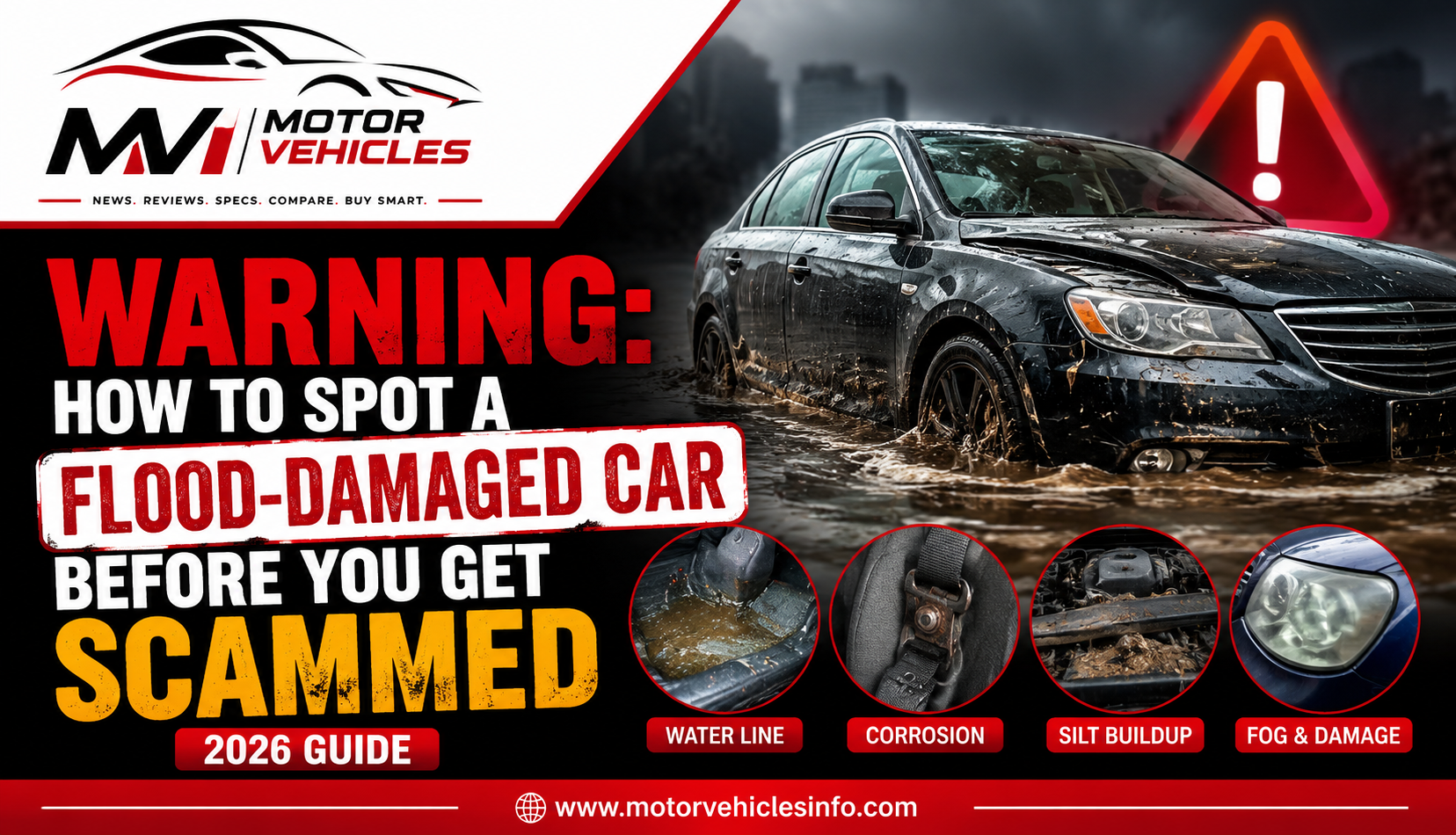
After any major hurricane or flash flood, thousands of flood-damaged cars get dried out, detailed, and quietly resold — often across state lines, with the title “washed” clean of any flood record. A flood-damaged car can look and smell fine at a test drive and still fail electronically within a year, because water gets into wiring harnesses, control modules, and airbag sensors that never fully dry out.
This guide shows you exactly how to spot a flood-damaged car in under 15 minutes, using the same checks appraisers and independent inspectors use — no tools required beyond your phone flashlight and your nose.
If you haven’t already, start with our complete guide to checking a used car’s history before you buy — this post is the deep-dive on one specific risk inside that process.
Key Takeaways
- A “flood-damage car/ vehicle“ is officially defined as one submerged enough that water damaged its body, engine, transmission, or other mechanical parts.
- Free VIN lookups from NICB and NMVTIS catch reported flood titles — but not unreported ones, which is why the physical inspection below matters just as much.
- The most reliable tells are hidden in places a quick detail job can’t reach: under carpet padding, inside seatbelt retractors, behind trim panels, and inside headlight housings.
- If you find even two of the signs below, walk away or insist on a pre-purchase inspection at a trusted mechanic before paying anything.
Step 1: Run a Free Flood-Title VIN Check First
Before you go anywhere near the car in person, run a VIN check flood search through these two free databases:
- NICB VINCheck — a free public lookup that flags whether a VIN has been reported by a participating insurer as salvage, flood-damaged, or stolen and unrecovered.
- NMVTIS — the federally mandated National Motor Vehicle Title Information System, which pulls title-brand data (including “flood”) directly from state DMVs and insurers.
These databases only show what’s been reported. An uninsured owner who paid cash for a flood damaged vehicle and never filed a claim can retitle it clean in a state with weak branding laws — a practice sometimes called title washing. This is how a car with real water damage can still end up sold as a clean flood title car with no brand on the paperwork at all. We cover exactly how that scam works in Title Washing: How Sellers Hide a Car’s History Across State Lines.
For a deeper comparison of which paid report actually catches flood and accident history best, see Carfax vs AutoCheck: Which Report Catches More Problems? — we bought both reports on the same VINs and compared what each one flagged.
Step 2: The 12-Point Physical Inspection for Water Damaged Car Signs
Do this inspection during daylight, and bring a phone flashlight — you’ll need it for the dark spaces water hides in. These are the same water damaged car signs independent inspectors look for on a salvage flood title re-check.
Interior checks for a flood damaged vehicle
- Pull back the carpet at a rear footwell. Water leaves a visible tide line or discoloration on the padding underneath, even after professional cleaning. This is the single hardest spot to fully dry and clean, which makes it the most reliable interior tell.
- Check under the spare tire. Silt, sand, or rust in the spare-tire well is a strong signal the trunk was flooded — this area rarely gets detailed.
- Pull a seatbelt all the way out. …this is one of the most reliable water damaged car signs for a car sold as a salvage flood title rebuild.
- Check for mismatched carpet or upholstery texture. A flood-repair shop sometimes replaces only the front carpet (visible) but not the rear or trunk liner (hidden), leaving a new-vs-old contrast.
- Do the smell test with the windows up for a few minutes, then open the door. A strong wave of air freshener, disinfectant, or “new car” scent in an older vehicle is a common way sellers mask mildew.
- Check screw heads and bolts under the dash and seats. Rust or corrosion on interior fasteners that should never see water is a strong indicator, since exterior rain exposure doesn’t reach them.
Electrical and mechanical checks
- Inspect the fuse box and wiring harness under the dash. Look for a brownish tide line, corrosion, or a slightly different shade of wire coating — water-damaged harnesses often get partially replaced, and the new sections stand out. On a flood damaged vehicle, harnesses often get partially replaced, and the new sections stand out against the old wiring.
- Check inside the headlight and taillight housings for fogging or a visible water line. Sealed lights that show internal moisture residue almost always had water intrusion at some point.
- Look at the engine bay for a “flood line.” Silt or discoloration in the same horizontal band across the block, alternator, and firewall — at the same height on both sides — is close to a smoking gun.
- Check the air filter and glovebox interior. Both are easy to forget during a flood cleanup. Silt, warping, or a musty filter is a strong red flag.
- Test every electrical accessory — power windows, seat adjusters, infotainment, warning lights, and the HVAC on all fan speeds. Flood-damaged control modules often fail intermittently rather than all at once, which is exactly why a five-minute test drive won’t catch it.
- Check the odometer and dashboard cluster for condensation or a foggy lens. Moisture trapped behind the gauge cluster glass rarely comes from anything but submersion.
Red Flags That Have Nothing to Do With the Car Itself
- Price 20%+ below market for the mileage and trim, especially right after a named storm in that region.
- Out-of-state title, particularly from a state that was recently hit by a hurricane or major flooding, on a car being sold somewhere far from that region.
- Seller is cagey about maintenance history or claims to be “just helping a friend sell it.”
- Title reissued recently relative to the car’s age, with no clear reason given — a common sign of title washing after a flood claim.
If you spot this pattern, run a lien and lender check alongside the flood check — cars offloaded quickly after a disaster sometimes still carry an active loan the new “clean” title doesn’t disclose.
What to Do If You Find Flood-Damage Car
- Walk away if you found 2 or more red flags from the list above. Flood damage is progressive — corrosion and electrical failures typically get worse over months, not better.
- If you’re still interested, get an independent pre-purchase inspection from a mechanic with no relationship to the seller, and tell them specifically to check for a flood-damaged car, not just a general inspection.
- Report it. If you believe a seller knowingly hid flood damage, you can file a complaint with your state attorney general’s consumer protection office and with the Federal Trade Commission, which enforces the Used Car Rule requiring dealers to disclose known material defects.
Flood-Damaged Car FAQ
Can a flood-damaged car be fixed safely?
Some can be safely repaired if the water was shallow, fresh (not salt), and the car was dried and serviced within a day or two — but airbag modules, wiring harnesses, and safety sensors are frequently not fully restorable, which is why insurers total most flood claims rather than repair them.
Does a flood title always say “flood” on it?
No. States use different brands (salvage, flood, junk, rebuilt) and enforcement varies widely, which is exactly how title washing across state lines happens. A clean-looking title is not proof the car was never flooded — see our branded title guide for how each brand is supposed to work.
Will a Carfax or AutoCheck report always catch flood damage?
Only if an insurer or DMV reported it, our side-by-side test in Carfax vs AutoCheck found real gaps between the two — which is exactly why the physical inspection in this guide matters even after a clean report.
Is it illegal to sell a flood-damaged car without disclosing it?
In most states, yes, if the seller knew about the damage — this typically falls under state lemon laws or general consumer-fraud statutes, and dealers face additional disclosure duties under the FTC’s Used Car Rule. Requirements vary by state, so check your state attorney general’s site for specifics.
Next Step: Pull the Full History Before You Pay
A physical inspection catches what a report misses, and a report catches what you can’t see with your eyes. Before you hand over a deposit, pull the full title and accident history — our Best VIN Check Service for Buying a Used Car Under $10,000 breaks down which report gives you the most for the price on a budget used car.
For the complete pre-purchase process — financing, inspection, negotiation, and paperwork — go back to the pillar guide: How to Check a Used Car’s History Before You Buy.