You found the car. Clean title, low miles, priced right. Everything checks out on paper — but paper is exactly the problem. Title washing is the quiet scam that turns a wrecked, flooded, or stolen vehicle into a “clean title” car simply by moving it to a state that never asks the right questions. Buyers lose thousands, and most never find out until the transmission dies or the insurance company refuses to pay a claim.
This guide breaks down what title washing actually is, how sellers pull it off across state lines, and exactly how to protect yourself before you sign anything.
What Is a Car Title and Why It Matters
A car title is the legal document that proves ownership. It also carries a vehicle’s official record of any major damage, in the form of a “brand” — words like salvage, flood, rebuilt, or junk printed directly on the paperwork.
Every state issues its own titles, and every state has its own rules for when a brand gets applied. That inconsistency is the whole reason title washing exists. A car that would automatically get branded “salvage” in Florida might slip through with a clean title in a state with looser standards.
Knowing how to read a title — and knowing which state issued it and when — is the first skill every used-car buyer needs. If you haven’t already, it’s worth learning how to decode a VIN number, since the VIN is what ties a vehicle’s full multi-state history together, even when the physical title in front of you looks spotless.
What Is Title Washing?
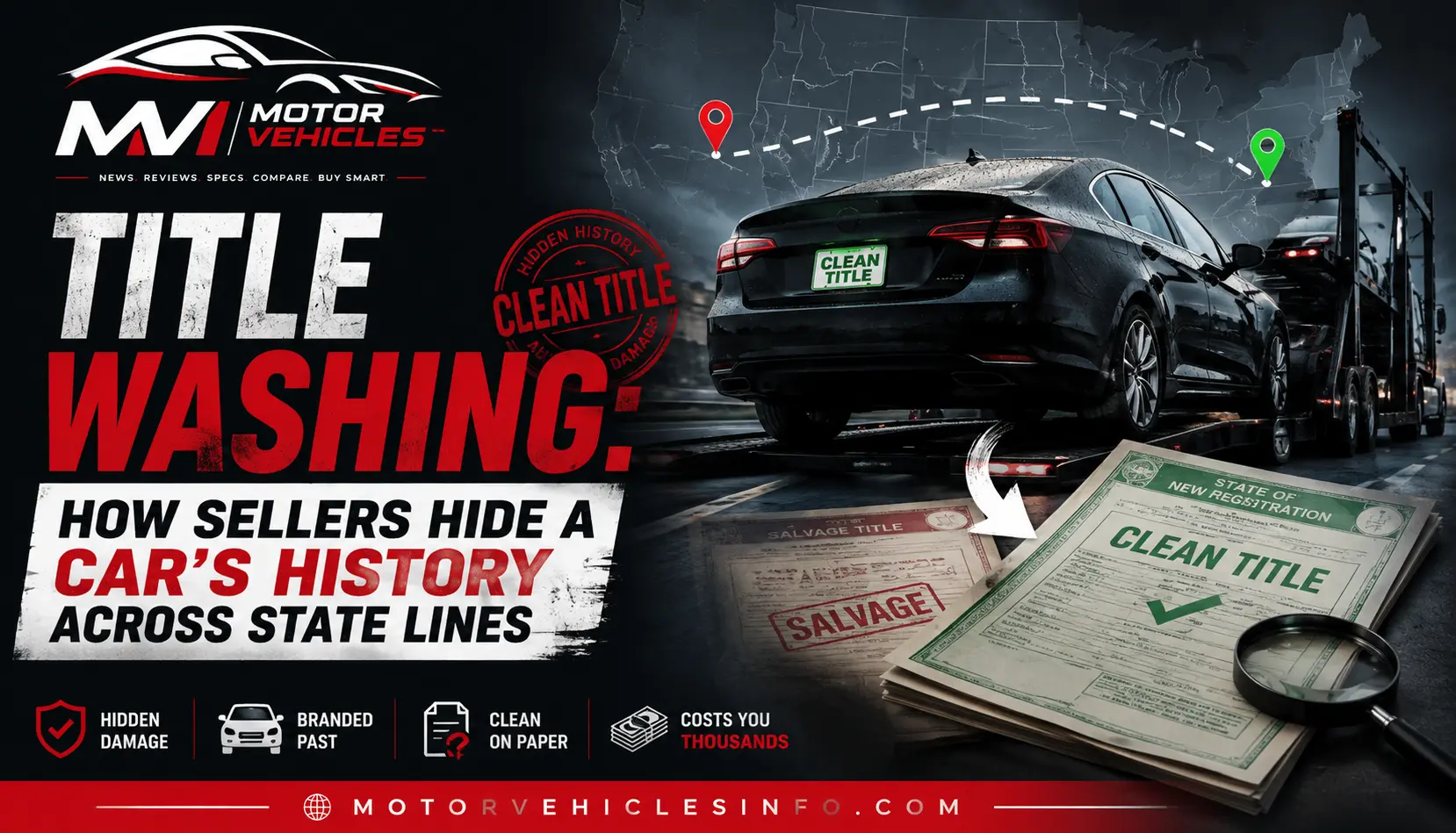
Title washing is the practice of moving a damaged, salvage, or stolen vehicle from one state to another specifically to strip off a title brand and get a fresh, “clean” title issued in its place. It’s essentially laundering — not money, but a vehicle’s paper trail.
Here’s the typical playbook:
- The designation “salvage” is awarded to cars that are rendered a total loss due to flooding, fires, or accidents.
- Rather than fix and re-check the vehicle, the seller gives the car a different title in a state that has less stringent salvage laws.
- That state issues a new title with no damage brand listed.
- The vehicle is sold to an unsuspecting buyer as a normal, clean-title used car.
This form of title washing depends entirely on gaps between state DMV systems. Some states report title brands to NMVTIS almost instantly. Others lag by days or weeks — and that lag is the window title washers exploit. Understanding what title washing looks like from the inside is the fastest way to spot it from the outside.
A Salvage Title VS Rebuilt Title?
These two terms get confused constantly, and title washers count on that confusion.
The definition of a salvage car title is that the vehicle has been deemed to be a total loss and is no longer considered safe to operate by either the insurance company or the state government, usually because the amount required to make the repairs exceeded 70% or 75% of the market value of the car.
A rebuilt title is what a salvage vehicle becomes after it’s been repaired and passed that inspection. It’s disclosed, it’s legal to drive, and — critically — it’s still marked in the vehicle’s record forever. A rebuilt title is not a clean title; it’s an honestly disclosed one.
| Feature | Salvage Title | Rebuilt Title |
| Meaning | Declared a total loss, not roadworthy as-is | Repaired salvage vehicle, passed inspection |
| Legal to drive | No, until rebuilt and inspected | Yes |
| Resale value | Sold well below market (often 30–50% off) | Discounted, but drivable and insurable |
| Disclosure required | Yes, always | Yes, always |
| Where title washing targets it | Erasing the “salvage” brand entirely | Erasing the “rebuilt” brand to look 100% clean |
For a full breakdown of every brand type you might see, our guide to branded title types walks through junk titles, flood titles, lemon-law buybacks, and more — all of which are common targets for title washing
Signs of Title Washing
You won’t always catch a washed title just by glancing at the paperwork. But a few patterns show up again and again.
- A recently issued out-of-state title. A car titled in a new state just weeks before the sale is one of the clearest title washing red flags.
- A mismatch between the title’s age and the car’s mileage or wear. Heavy wear on a “young” title suggests something was hidden.
- The seller is pushing a cash-only, paperwork-light deal. Urgency is a classic pressure tactic used to prevent buyers from running checks.
- Inconsistent paint texture, panel gaps, or overspray. These often point to prior collision repair that was never disclosed.
- A musty smell, water staining under the carpet, or corroded fasteners. All are telltale signs of undisclosed flood damage — one of the most commonly washed brands.
- The VIN doesn’t match across the title, dashboard plate, and door jamb sticker. This can indicate VIN cloning layered on top of title washing.
- The seller resists a pre-purchase inspection or won’t let you run the VIN.
If two or more of these show up at once, treat it as a serious warning sign, not a coincidence.
Why Washed Titles Are a Massive Threat
Title washing isn’t a paperwork technicality — it’s a direct safety and financial risk. A flood-damaged car with electrical corrosion can experience sudden brake or airbag failure years after the fact. A poorly repaired frame can fold in a way it was never designed to during a second collision.
Financially, buyers of washed-title vehicles routinely pay full market price for a car that’s actually worth 20–40% less. Insurers can also deny claims outright once they discover an undisclosed salvage history, leaving the owner with no coverage and a car that may not be legally resalable.
The scale of the problem is bigger than most people assume. Regulatory analysis behind the NMVTIS federal rule has repeatedly pointed to washed brands as a driver of vehicle title fraud nationally, which is exactly why the system exists — to make sure a brand applied in one state follows the car everywhere it goes next.
Is title washing illegal?
Yes. Title washing is illegal under both federal and state law. It generally entails some form of deceitful behavior on the part of individuals and corporations, and in most instances, such activities break federal odometer and branding laws that are upheld by NMVTIS, which falls under the authority of the U.S. Department of Justice, precisely to prevent brands from fading out while the car moves between states.
At the state level, each state has legislation requiring disclosure when selling salvaged cars, where selling the car without disclosing its brand becomes an act of fraud liable to legal prosecution. The problem isn’t a lack of laws — it’s that title washing exploits the seams between 50 separate state systems, each with its own reporting speed and standards. That’s exactly why federal oversight through NMVTIS was created in the first place, and why sellers who deliberately retitle out of state to strip a brand are committing title washing fraud, not just taking advantage of a loophole.
How to Avoid Title Washing Scams
The good news: title washing scams are very avoidable if you build a few habits into every used-car purchase.
- Run the VIN through NMVTIS before you negotiate price. It’s the single most authoritative source, since it pulls brand history from every participating state.
- Check the vehicle for free through NICB’s VINCheck to see if it’s ever been reported stolen or declared a total loss by a participating insurer.
- Order a full vehicle history report, and cross-check it against our guide on running a stolen-vehicle VIN check.
- Get an independent, in-person pre-purchase inspection from a mechanic with no connection to the seller.
- Check for a lien before you pay a cent — our car lien check guide explains why an unresolved lien can be just as costly as a washed title.
- Compare the odometer reading against service records. Title washing and odometer rollback frequently travel together.
- Ask direct questions about the title’s history and watch how the seller responds — hesitation is data.
- Review the FTC’s Buyer’s Guide requirements so you know what a dealer is legally obligated to disclose, per the FTC’s used-car disclosure rule.
What To Do if You Discover Title Washing After Purchase
If you already own the car and just discovered the brand was washed, don’t panic — but move quickly.
- Document everything. Photograph the VIN number, the title, and any physical evidence of damage.
- Get a report from the NMVTIS to see if there is a complete and correct title history of the vehicle.
- Alert the DMV in your state regarding the discrepancy and ask for a corrected title to be issued.
- Send your complaint to the office of your state’s attorney general for protection of consumers if a dealership was involved.
- See a lawyer specializing in lemon laws/consumer fraud.
- Turn to NICB if you suspect a wider scam operation.
How Title Washing Affects Vehicle Values and Insurance
A washed title inflates a car’s apparent value by hiding the exact information that would normally lower its price. Once the true brand resurfaces — during a trade-in appraisal, an insurance claim, or a future resale — the car’s real value drops sharply, and so does the current owner’s equity.
Insurance is where the damage gets personal. Most insurers require an accurate title disclosure at the time of policy issuance. If a claim investigation later reveals a previously salvage or flood-branded vehicle, the insurer can rescind the policy or deny the claim entirely — leaving the owner to cover repairs or a total loss out of pocket. This is one of the most overlooked long-term costs of title washing: the risk doesn’t disappear after the sale; it just transfers to whoever holds the title when the truth comes out.
What to Do if You’re the Victim of a Title Washing Scam
Being the direct victim of a title washing scam — where a seller knowingly and deliberately hid a branded history — is different from simply discovering an issue later. Here’s the practical path forward:
- Stop driving the vehicle if there’s any indication of a safety-related repair history you haven’t verified.
- Gather your purchase agreement, all seller communications, and the vehicle history report as evidence.
- File a police report if you believe the seller committed intentional fraud.
- Report the seller to your state DMV’s fraud unit and to the National Insurance Crime Bureau.
- Take legal action against them – the law in a lot of states lets consumers sue and get compensation, and even treble damages if the case is for consumer fraud.
- Alert other buyers if the seller is an online dealer by posting a factual account of what happened on your feedback page.
The title-washing frauds work because the person who was duped remains silent out of embarrassment or lack of knowledge. Reporting it is what actually shuts these operations down.
The Bottom Line
Title washing works because it hides in plain sight, buried inside a legitimate-looking piece of paper. The fix isn’t complicated, though — it’s a habit. Run the VIN, pull the NMVTIS report, get an inspection, and treat any resistance from a seller as your answer. A few extra dollars and thirty extra minutes before you buy can save you from a five-figure mistake.
Frequently asked questions
What is a title check?
A search of a vehicle’s official title records — across federal and state databases — for brands like salvage, rebuilt, and flood, plus the car’s full title history.
What exactly does title washing mean?
Title washing means re-registering a vehicle in a different state specifically to remove a damage brand — like salvage or flood — from its title, so it appears clean to the next buyer.
How can I check if a title has been washed?
Run the VIN through NMVTIS and a reputable vehicle history service, then compare that report against the physical title in hand. Any brand shown in the report that’s missing from the paper title is a strong sign of title washing.
Is a salvage title the same as a rebuilt title?
No. A salvage title means the vehicle was declared a total loss and generally can’t be driven until repaired and inspected. A rebuilt title means that repair and inspection already happened and the car is legally roadworthy again.
Can a dealer legally sell a car with a washed title?
No. Selling a vehicle with a knowingly concealed brand is illegal under state and federal law, regardless of whether the seller is a private party or a licensed dealer.
What states are most associated with title washing?
States with slower NMVTIS reporting or historically looser salvage-branding thresholds have been flagged more often in title washing cases, though the scam can technically originate in any state.
Will insurance cover a car with a washed title?
Typically not once the true history is discovered. Insurers can rescind coverage or deny a claim if a washed or undisclosed brand surfaces after the policy was issued.
Does a VIN check always catch title washing?
Not always. NMVTIS significantly reduces title washing, but reporting delays and older records that predate full state participation can still create gaps.
What should I do immediately if I suspect title washing?
Stop the transaction if you haven’t paid yet, or document everything and contact your state DMV if you already own the vehicle. Don’t wait — the more time passes, the harder it is to prove.
Can I get my money back if I bought a washed title car?
In many cases, yes. Consumer-fraud statutes and, sometimes, lemon laws allow buyers to pursue a refund or damages, particularly if a dealer was involved.