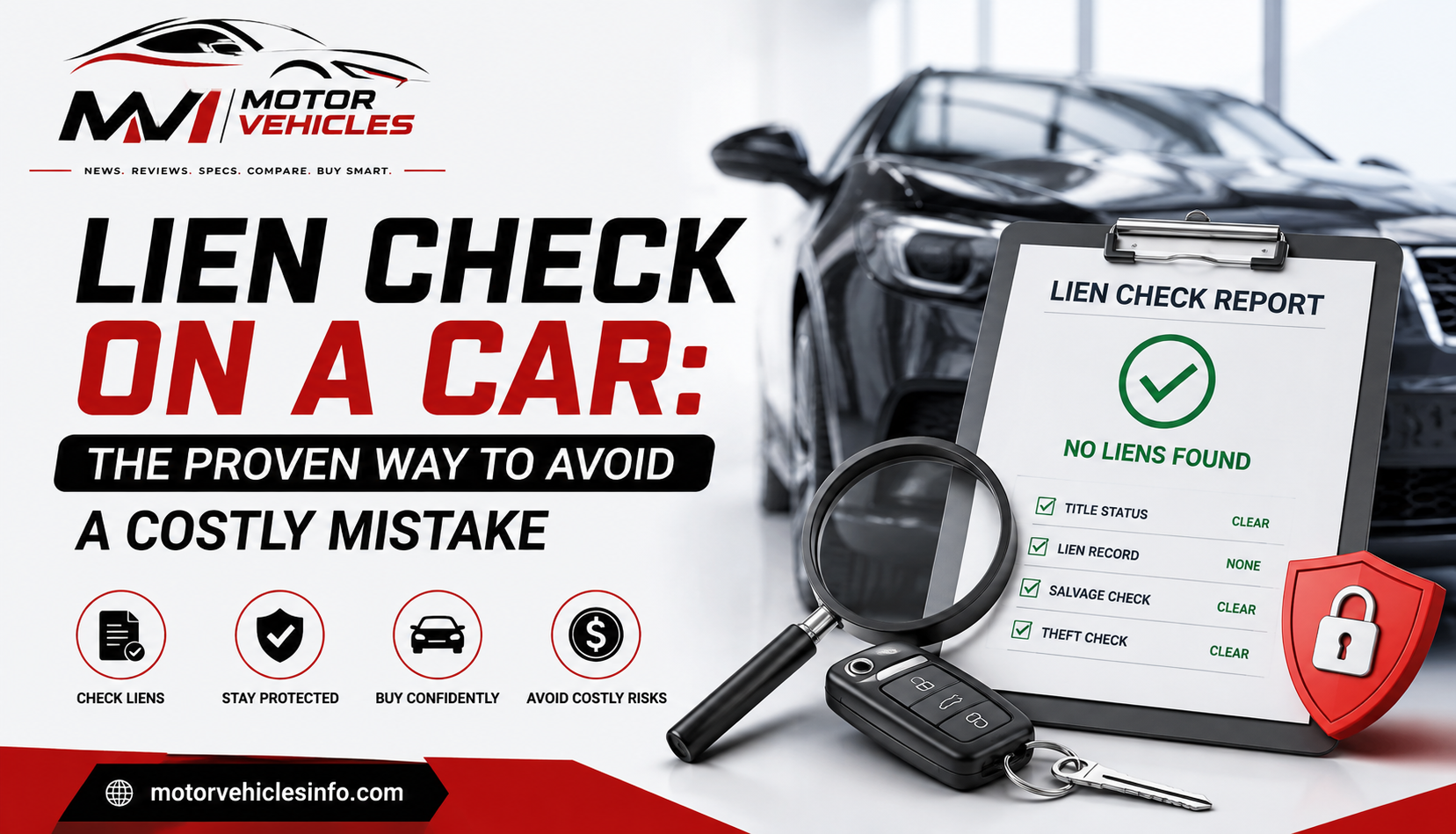
You found the car. The price is right. The seller wants cash today. Before you hand over a single dollar, run a quick lien check — it takes ten minutes, and it’s one of the cheapest ways to protect yourself against a costly mistake.
If the car still has a lien on it and you don’t catch it, you could pay in full and still not legally own the vehicle, because the bank does. A simple check like this tells you exactly where things stand before any money changes hands.
This guide walks through how to check for a lien, what a lien actually means for you as a buyer, and what to do if the search turns up a problem.
What Is a Lien, and Why Does a Lien Check Matter?
A lien is a legal claim a lender places on a vehicle’s title when the current owner financed it. Until the loan is paid off, the lender, not the driver, holds a legal interest in the car. Most liens are ordinary and harmless. They get released the moment the loan is settled, and a routine check like this will simply come back clear.
The problem is a private seller who is still mid-loan, underwater on the car, or dishonest about the payoff. If you skip this step and pay them in full, you can end up with:
- A car you can’t register or title in your name
- A bank that can legally repossess a vehicle you already paid for
- Months of paperwork chasing a lien release from a lender who has no relationship with you
- No easy way to resell the car until the mess is fixed
This is exactly why experienced buyers treat this step the same way they treat a VIN check: as required, not optional.
How to Run a Lien Check: 4 Reliable Methods
1. Ask to See the Title — and Read It Carefully
Start with the physical title before you bother with any other method. If the seller hands you a clean title with no lienholder listed and their name matches their ID, that’s a good early sign. If the title says “Electronic Title” or “Lien Recorded,” the vehicle isn’t fully paid off yet, no matter what the seller tells you.
Red flag: a seller who “can’t find the title right now” or promises to mail it after the sale. Never pay in full without the title in hand, or a documented plan involving the lienholder directly.
2. Run a State DMV Title Search
Most state DMVs let you search title and lien check status using the VIN, either online or in person. Some states offer this service for free; others charge a small fee. This is the most authoritative source because it comes straight from the state’s title record, not a third-party database.
3. Use the National Motor Vehicle Title Information System (NMVTIS lien)
NMVTIS is a consolidated, federally mandated database of motor vehicle title and history information compiled by participating state motor vehicle agencies, insurers, and salvage yards. Because it pulls directly from state title records, a report through an approved NMVTIS lien provider will typically flag an active lien alongside brand history, odometer readings, and prior title status. You can start this search through the official NMVTIS lien consumer portal — the safest starting point since it’s run by the U.S. Department of Justice, not a private company trying to upsell you.
4. Run a Full Vehicle History Report
This is just one data point. Pairing it with accident history, odometer records, and title brand status gives you the full picture in a single report. If you haven’t already pulled one for this VIN, this is also the moment to compare the best VIN lien status check services for buyers under $10,000 so you’re not overpaying for a report that skips lien data entirely.
Quick Comparison: Which Lien Check Method Should You Use?
| Method | Cost | Speed | Best For |
|---|---|---|---|
| Ask to see the title | Free | Instant | First-pass screening with any seller |
| State DMV title search | Free–$10 | Same day | Verifying against the official state record |
| NMVTIS lien-approved report | $3–$25 | Minutes | Combining lien status with title brand history |
| Full VIN lien status report | $15–$40 | Minutes | Buyers who also want accident and odometer data |
Warning Signs a Lien Check Might Turn Up Trouble
Watch for these red flags during the sale:
- The seller insists on cash only, paid directly to them, not to a lender
- The title shows a lienholder’s name that doesn’t match any bank the seller mentions
- The seller is vague about who they financed the car through
- The asking price is unusually low for the mileage and condition
- The seller wants to complete the deal somewhere other than a bank, DMV, or title company
None of these automatically mean fraud. But combined with a skipped verification step, they turn a simple used-car purchase into a costly, drawn-out headache.
What to Do If Your Lien Check Comes Back Positive
Finding a lien doesn’t have to kill the deal. Here’s the safe way to handle it:
- Get the payoff amount directly from the lienholder, not the seller’s word.
- Structure the payment so the payoff amount goes straight to the lender and only the remaining balance goes to the seller.
- Get the lien release in writing before finalizing the title transfer.
- Use a title company or your state DMV to handle the transaction if the numbers are large — the small fee is cheap protection.
If a seller refuses any of these steps, walk away. A legitimate seller with an active lien has no reason to avoid a payoff-first structure.
How Long Does It Take, and What Does It Cost?
Most buyers finish this whole process in under fifteen minutes. Checking the physical title takes seconds. A state DMV title search is usually free or costs a small filing fee, with results often back the same day. An NMVTIS lien-approved report typically costs three to twenty-five dollars, and returns results in minutes. A full history report runs fifteen to forty dollars but bundles accident, odometer, and title-brand data into one purchase. None of these steps need a lawyer or a trip further than your laptop or the local DMV office.
The Bottom Line
A lien check takes minutes and can save you from a legal and financial headache that drags on for months. Start with the title, verify through your state DMV or an NMVTIS lien-approved provider, and confirm there are no theft or salvage flags with a quick free NICB VIN lien status. For the fullest picture before you commit any money, pull the complete history through our complete guide to checking a used car’s history before you buy.
A ten-minute check like this is a small price for the peace of mind that you’re actually buying the car, not someone else’s unpaid loan.
Frequently Asked Questions
Can a car be sold with a lien on it?
Yes, but the lien must be paid off and released as part of the sale, usually with the payoff going directly to the lienholder before or at the time of transfer.
How do I know for sure a lien is fully released?
Request a lien release letter from the lender and confirm the updated title shows no lienholder, either directly from the seller or through your state DMV.
Does a VIN report include a lien check?
Many NMVTIS-approved vehicle history reports include current lien status alongside title brand history, though state DMV records remain the most authoritative source.
Is it illegal to sell a car with a lien on it without disclosing it?
Laws vary by state, but knowingly selling a vehicle with an undisclosed lien can expose the seller to fraud claims. Always verify this yourself rather than relying on the seller’s disclosure alone.