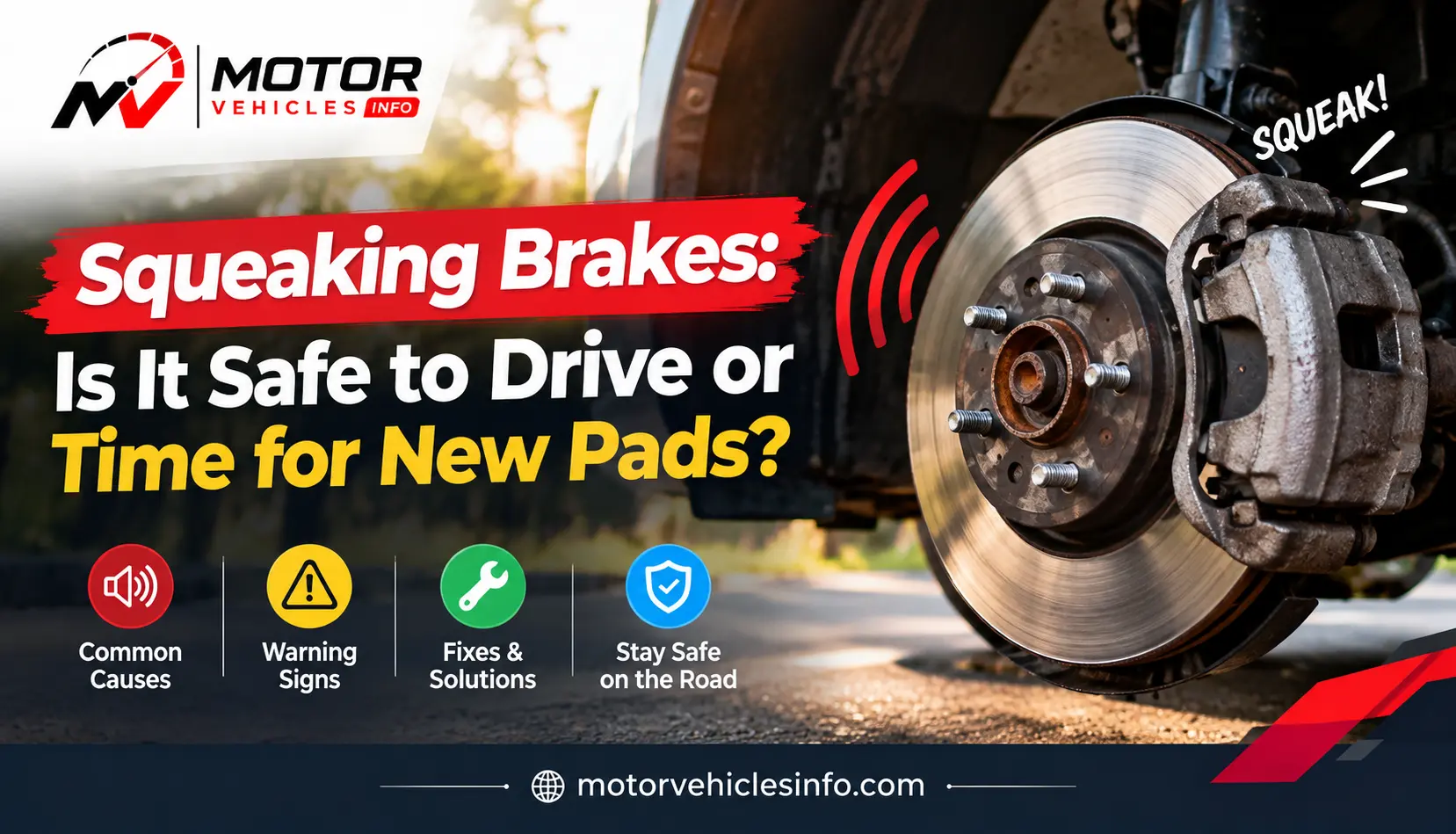
You ease onto the pedal at a red light and out comes a shriek that makes the pedestrians glance over. It’s embarrassing, sure. But the bigger question hits a second later: is my car okay, or am I one bad stop away from trouble?
The thing with squeaky brakes is that the sound does not say much, but the facts do. A chirp at the beginning of a moist morning is not a problem. A persistent squeak that keeps following you throughout the day may very well be your brakes crying out for new pads. You will find everything you need to know in this guide.
Key Takeaways
- Squealing brakes don’t have to be an issue, but a prolonged squeal after the initial stops needs a visit sooner rather than later.
- The grinding sound, a soft pedal, and the brake light on mean you need to park your vehicle immediately and see an expert mechanic.
- The average life of brake pads varies from 30,000 to 70,000 miles (48,000 to 113,000 kilometers), but this depends greatly on individual driving habits and pads’ material.
- There might be some squeaking due to contamination or lack of lubricant, and it will require only cleaning and application of proper grease.
- However, the wear that is neglected can drag your rotors along.
Is It Safe to Drive With Squeaking Brakes?
This is usually the case for a brief yet cautious drive. The requirements are as follows: the sound produced is tolerable, the pedal feels right, and the vehicle halts in a straight manner. Consider squeaking brakes a flashing alarm that makes noise.
Working brakes are a legal requirement almost everywhere. In Australia, for instance, Australian Design Rule 31 sets the national standard for passenger car brake systems, and drivers in the US and UK face similar expectations. A tired brake system can land you in legal trouble as well as physical danger.
When Squeaky Brakes Are Low Risk
A faint squeak on the first stop of the day is nearly always moisture. A short chirp after a car wash is the same story. If the sound disappears within a few stops and the car stops the way it always has, keep driving and keep listening.
When Squeaking Brakes Mean Stop Driving
Pull over if you hear grinding, feel the pedal sink toward the floor, or see a warning light. The same goes if the car drifts to one side when you brake. New owners often wait too long at this point, so if you’re still learning the ropes, our car guides can help you decode what each dashboard light means.
Here’s a real-world example. A delivery driver let a steady squeal go for six weeks. The pads wore down to bare metal and scored both front rotors, so a simple pad swap became a much larger job.
Why Are My Brakes Squeaking? 9 Common Causes
If you’ve been wondering, “why are my brakes squeaking?”, start with this list. Squeaky brakes rarely have a mysterious cause.
- Worn pads. Many pads carry a small metal tab that squeals once the friction material runs low.
- Morning moisture. Damp air leaves a light film of rust on the rotors overnight. A few stops scrub it away.
- Dust and debris. A bit of grit between pad and rotor makes a scratchy, irritating squeak.
- Glazed pads or rotors. Hard, repeated braking can bake the surface smooth and shiny, which produces a high-pitched whine.
- Cheap or very hard pad material. Metal-heavy pads tend to be noisier than ceramic ones.
- Dry or missing hardware. Clips, shims, and slide pins need proper lubrication to stay quiet.
- Scored or uneven rotors. A rough surface sets the pads vibrating.
- Rushed installation or no bedding-in. New pads need a gentle start.
- A sticking caliper. When it won’t release, one pad drags, squeaks and wears out fast.
Why Are My Brakes Squeaking Only in the Morning?
Blame moisture. Rust forms on the rotors overnight, and the pads rub it off within minutes. If the noise fades quickly, relax. If brakes squeak later in the day too, something else is going on.
Why Do Brakes Squeak at Low Speed?
Low-speed squeaks usually point to worn pads or glazed surfaces. At a crawling pace, there’s less force and less heat to damp the vibration. That’s why squeaking brakes seem loudest as you roll up to a stop sign.
Brake Noises Decoded: Squeak, Squeal, Grind, or Click?
Not every brake noise means the same thing. This table gives you a quick read, but if a sound sticks around, get it checked.
| Sound | Likely cause | Urgency |
| Light squeak, first stops only | Moisture or surface rust | Low |
| High-pitched squeal, constant | Wear indicator or glazed pads | Medium, inspect soon |
| Grinding or growling | Pads worn to metal | High, stop driving |
| Clicking when braking | Loose pads, clips or hardware | Medium |
| Pulsing with a squeal | Warped or uneven rotors | Medium to high |
What a Squeaky Brake Is Really Telling You
But squeaking brakes are symptoms. Pitch, time, and position say more than volume ever could. Note what conditions it occurs in: starting the car cold, pressing the brake lightly, braking heavily, or turning. That will give a mechanic something more to go on.
If, however, you notice shaking accompanying the sound, then the rotors or the suspension is the problem. We explain the seven reasons for your car to shake when you slow down or brake in our guide.
Front vs. Rear Brake Pads: Why the Squeak Can Come From Either End
Every wheel has pads, so any of them can make noise. That said, the front axle does the heavy lifting. When you brake, the car’s weight pitches forward, and the front brake pads take a big share of the stopping force. That’s why they usually wear out first.
Squeaking Brakes at the Front
The front pads absorb the most heat and wear. If a squeal gets louder when you turn the wheel or brake downhill, look here first, and check the pad thickness before anything else.
Squeaking Brakes at the Rear
Brake pads rear sets typically last longer, but they’re far from immune. Rust, dry hardware and a seized caliper slide are the usual culprits. Plenty of cars also run drum brakes at the back, where worn shoes or dust trapped inside the drum can squeak.
Electric and hybrid owners have a twist to consider. Regenerative braking means the friction brakes do less work, so rotors can rust and squeal from sheer underuse. Our EV guides explain how these cars behave differently from petrol models.
Squeaky Brake or Worn Brake Pad? 7 Signs It’s Time for New Pads
So how do you separate a harmless squeak from real wear? Squeaking brakes alone don’t prove the pads are finished, so look for these seven signs.
- A constant squeal that doesn’t fade after a few stops.
- Grinding or growling, which suggests metal is touching metal.
- Thin pads. Many mechanics advise replacement near 3 mm of friction material, and anything under about 6 mm (a quarter inch) deserves close attention.
- Longer stopping distances or a pedal that feels soft.
- Vibration through the pedal or steering wheel.
- A brake warning light or wear sensor message.
- Pulling to one side under braking.
Before you blame the pads, check whether your model has an open brake recall. Australian owners can search the government’s Vehicle Recalls database, while US and UK owners have their own national recall tools.
Regulators take brakes seriously, and inspection rules show it. Transport for NSW publishes Light Vehicle Safety Check Standards that include a dedicated brakes rule. Requirements vary, so confirm what applies in your state or country before a roadworthy test.
How Long Should Brake Pads Last? Mileage and What Shortens Their Life
Most manufacturers say pads should last between 30,000 and 70,000 miles. Australian tyre and brake retailers often quote about 40,000 to 100,000 km. That’s a wide window, because habits and conditions change everything, including how soon squeaking brakes show up.
A few things wear pads out early:
- Stop-and-go city driving
- Aggressive braking and late stops
- Heavy loads, towing or roof racks
- Steep hills and mountain roads
- Soft pad compounds
- Sticking calipers or dry hardware
On the flip side, smooth driving, a lighter load, regular inspections and quality ceramic or semi-metallic pads all stretch the interval. Fleet managers should log every brake inspection by vehicle, since delivery routes chew through pads much faster than highway miles.
Sellers have something to gain here too. A folder of brake receipts builds buyer trust, and a clean paper trail pairs nicely with the history checks we cover in our registration and vehicle history guides.
Squeaking After New Brake Pads: Normal Break-In or a Problem?
A little noise from new pads is common. The surfaces are still getting acquainted, and a thin layer of friction material is transferring onto the rotor. This bedding-in period usually settles within the first few hundred miles of ordinary driving.
You can speed things along. Use moderate stops from medium speed, skip hard emergency braking early on, and follow the pad maker’s instructions.
Squeaking brakes after a fresh install become a real problem when:
- The noise is loud and never fades
- The shop skipped new shims, clips or lubrication
- Worn rotors weren’t resurfaced or replaced
- The pads are a poor match for your vehicle
- One wheel runs hot, hinting at a sticking caliper
If any of that sounds familiar, take the car back.
How to Stop Squeaky Brakes: Fixes That Work (and Mistakes to Avoid)
Learning how to stop squeaky brakes starts with finding the cause. Once you know it, the fix usually follows.
Fixes That Work
- Clean the brakes. Brake cleaner clears dust and grit from rotors and calipers.
- Lubricate the right spots. Put high-temperature brake grease on the back of the pads and on the slide pins. Keep it off the friction surface.
- Replace worn hardware. New clips and shims cost very little and quiet plenty of squeaks.
- Resurface or replace glazed rotors. A fresh surface brings back grip and silence.
- Choose better pads. Ceramic pads have a reputation for running quieter than metal-heavy ones.
- Replace pads and rotors together when both are worn, because new pads on old rotors can start squeaking again.
Expert tip: snap a photo of the pads before you take them off. It makes reassembly easier and helps you spot uneven wear.
Common Mistakes to Avoid
- Spraying oil or general-purpose lubricant onto the rotors
- Greasing the pad face
- Mixing brands or types on one axle
- Buying the cheapest pads on the shelf
- Skipping the test drive after the repair
- Waiting for the noise to “go away” by itself
DIY owners, please use jack stands and never rely on a jack alone, and tighten wheel nuts to the specified torque. If you feel unsure at any stage, a professional brake check is cheap insurance.
What Ignoring Squeaking Brakes Really Costs: Pads vs. Pads and Rotors
Squeaking brakes cost the least to fix early. Wait too long, and the repair grows with every week.
| Stage | What you need | Relative cost | Safety risk |
| Early squeak | Clean, lubricate or new pads | Low | Low |
| Thin pads | Pad replacement | Low to medium | Medium |
| Metal on metal | Pads plus rotors | Much higher | High |
| Seized caliper | Caliper, pads and rotors | Highest | Very high |
Buying used? Use the noise emanating from the brakes as both a lever and a warning sign. The ACCC encourages you to have an independent inspection of the car when purchasing a used one, while the ACCC’s guide to new and used cars gives you information about your consumer rights in Australia.
FAQ
Why do the brakes squeal when stopping the car?
This problem is caused by worn-out brake pads, presence of rust, accumulation of dirt, or hardening and glazing of the pad surface. The noise stops after several braking processes if it is caused by moisture or wetness. But in case of persistent noise, the brake pads and rotors should be checked by the mechanic.
Is it dangerous to drive with noisy brakes?
It is not dangerous if squealing is soft, but if there is a screeching, squealing or grinding noise, and the brake pedal is soft, it means that the condition is critical, and you should not drive until it is fixed.
How many miles will your brake pads last?
Typically, pads last around 30,000 to 70,000 miles; however, depending on the driver’s behavior, the weight of the car, and the pads themselves, they can last more or less. Usually, front pads wear off faster than the rear pads.
Why do your brakes squeak even when you’ve just installed new pads?
This is because the initial installation causes the noise that will go away after driving for a couple of hundred miles. If the noise continues, check to see whether all parts have been properly installed or whether you have some issues with your rotor.
Can brake noise be solved on its own?
If noise is caused by moisture or wetness, it will most likely solve itself. However, if it is caused by wear, it won’t. The noise due to excessively worn pads gets worse over time.
What do brake noises mean: squeak, squeal or grind?
A squeak or squeal often points to light wear, moisture or glazing. Grinding usually means the pads are worn down to metal and need urgent attention. Clicking tends to mean loose hardware.
Do front and rear brake pads wear at the same rate?
No. Front brake pads usually wear faster because they carry most of the braking load. Brake pads rear sets can last far longer, though squeaking brakes at the back are still common.
How do I stop squeaky brakes without replacing the pads?
Cleaning the brakes and lubricating the contact points often does the trick, and fresh shims or clips can help too. If the pads are thin or glazed, replacing them is the better move.
Does a squeak mean I also need new rotors?
Not necessarily. Rotors need replacing when they’re scored, warped or below minimum thickness. A mechanic can measure them during a pad change.
Final Thoughts
Squeaking brakes are rarely a mystery once you listen closely. A faint, short-lived squeak is often harmless, while a constant squeal or a grinding growl is your car asking for help. Check the pads, know your mileage, and act early when brakes squeak.
Catching squeaky brakes in time keeps the repair small and your stops safe. It protects your car’s value too, whether you plan to keep it or sell it. Ignored squeaking brakes rarely fix themselves.
Hearing squeaking brakes right now? Book a brake inspection this week, and make pad thickness part of every service. For more practical advice on buying, owning and maintaining vehicles, visit Motor Vehicles Info and browse our latest news and guides.