
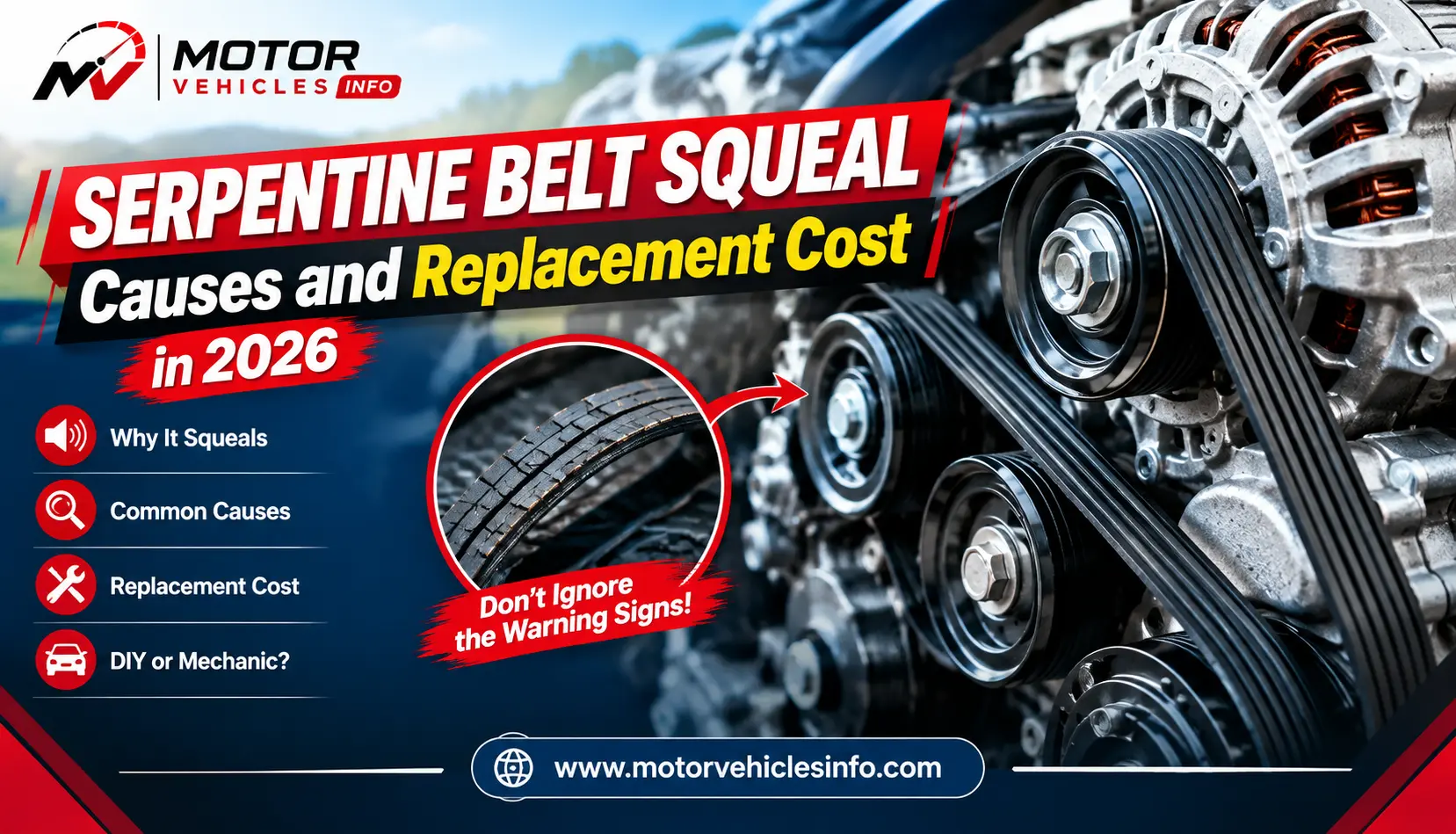
You start your truck on a chilly morning, and a shrill squeal echoes through the driveway. Your neighbor glances over. Your stomach sinks. That noise usually comes from one inexpensive rubber part: the serpentine belt.
The squeaky sound in the serpentine belt is usually very easy to spot and not expensive at all to repair. Neglecting it may make you run into trouble such as a flat battery, unresponsive steering, or engine overheating. Here you will find information about why it happens, its cost in 2026 in the USA, and the options for replacing it.
Key Takeaways
- A squealing serpentine belt typically signifies slipping, wear, lack of tension, or malfunctioning pulleys.
- Replacing a serpentine belt costs in America are approximately between $70 and $250, says Lemonade’s Cost Guide.
- Use of a tensioner and idler pulley increases the cost of a serpentine belt, but the new belt will be safer.
- A serpentine belt should not be mistaken for a timing belt, because timing belt breakdown may damage an engine.
- There are similar symptoms for a broken serpentine belt and alternator, and testing is necessary prior to purchasing parts.
- Belt life ranges from 60,000 to 100,000 miles; check your owner’s manual.
What Is a Serpentine Belt? How This Car Belt Works
A serpentine belt is one long, ribbed rubber belt that winds around several pulleys at the front of your engine. The crankshaft turns it, and it spins the parts your vehicle needs every second you drive. Many Americans still call it a fan belt or drive belt.
On most cars, trucks, and SUVs, this single car belt powers the alternator, power steering pump, A/C compressor, and often the water pump. Older vehicles used several separate V-belts. Automakers moved to one serpentine belt to save space and weight.
A spring-loaded tensioner keeps the belt snug, and idler pulleys guide its path. If one of those parts wears out, the serpentine belt can slip, squeal, or snap.
Serpentine Belt Diagram: How to Read Your Engine Belt Diagram
Every engine routes its belt differently. A serpentine belt diagram shows the exact path around each pulley. Getting it wrong can leave an accessory dead or even spin the water pump backward.
Where to Find Your Serpentine Belt Diagrams
Look for a sticker under the hood, often on the radiator support. Your owner’s manual usually prints the same engine belt diagram. A quick phone photo before you remove the old belt saves a lot of guessing. AutoZone stores can also help you match the right belt to your vehicle.
How to Read a Serpentine Belt Diagram
Follow the line from the crankshaft pulley, usually at the bottom. Note which pulleys touch the ribbed side and which touch the smooth back. The tensioner is normally drawn as a pulley with an arrow.
Why Is My Serpentine Belt Squealing? 7 Common Causes
A serpentine belt squeal is your car asking for attention. These seven causes show up most often.
- Loose tension. A stretched belt or weak tensioner lets the belt slip under load. AutoZone’s belt noise guide says a belt should flex no more than about a quarter inch per 12 inches of span.
- Overtightened belt. Too much tension can squeal at idle and wear out bearings.
- Misalignment. A crooked belt wears fast and chirps.
- Glazed or cracked rubber. Heat and age harden the belt until it slides instead of gripping.
- Fluid contamination. Oil, coolant, or power steering fluid softens rubber and causes slipping.
- Cold or wet weather. Moisture and low temperatures can cause a short squeal on startup. If the engine also struggles to turn over, read why a car won’t start in cold weather.
- A failing pulley or accessory. A rough bearing in the A/C compressor, alternator, or idler pulley can make the whole serpentine belt system noisy.
Serpentine Belt Squeal Diagnosis: What Each Sound and Situation Means
The timing and type of noise narrow things down fast. Use this table as a starting point.
| When It Happens | Likely Cause | What to Check |
| Squeal at cold start, fades after a minute | Moisture or slight glazing | Belt surface, tension |
| Squeal when turning the wheel | Power steering load, loose belt | Tensioner, belt tension |
| Squeal when A/C turns on | Slipping belt or tired compressor | Belt wear, compressor pulley |
| Constant chirp matching engine speed | Misalignment or pulley problem | Pulley alignment, bearings |
| Grinding or rumbling | Bad bearing in a pulley or accessory | Spin each pulley by hand |
| Slapping or flapping | Frayed or damaged belt | Look for missing chunks |
Quick Home Checks for a Squealing Serpentine Belt
With the engine off and cool, look for cracks, glazing, frayed edges, and missing ribs. Never touch the belt while the engine runs. A squeak near the wheels is probably your pads, not the belt, so see our guide on squeaking brakes.
Real-life scenario: Imagine a truck with an annoying squeak that occurs each time the driver makes a turn towards a parking spot. It seems the belt is all right, but there’s something wrong with the tensioner spring because the problem would still occur after replacing only the belt.
Bad Alternator Symptoms vs. Bad Serpentine Belt: How to Tell the Difference
Both problems can light up your dashboard, which is why drivers mix them up. The belt drives the alternator, so a slipping belt can make a healthy alternator look dead.
Bad alternator symptoms often include:
- Dim or flickering headlights
- A battery warning light
- Whining or grinding from the alternator
- A car that starts, then dies later
- Electrical accessories acting strangely
A bad serpentine belt tends to add:
- Loud squealing or chirping
- Visible cracks or glazing
- Heavy steering
- Weak air conditioning
- A rising temperature gauge
If the belt looks healthy and tight but the battery light stays on, suspect the alternator. If the belt is cracked or slack, replace it first and retest. A weak battery can copy these signs too, so read our guide on how long a car battery lasts before spending money on parts.
When to Replace a Serpentine Belt: Lifespan, Warning Signs, and Driving Risks
The replacement of a serpentine belt should be done at around 60,000 to 100,000 miles, but it would depend on the kind of driving you do and on the belt material used. The owner’s manual of the car provides information about how often the belt should be replaced.
Warning Signs Your Serpentine Belt Is Wearing Out
- Squealing, chirping, or squeaking
- Cracks across the ribs or missing chunks
- A shiny, glazed surface
- Frayed edges
- Power steering that feels heavy
- A battery light or overheating
Modern belts use tougher rubber, so they may not crack the way older ones did. Instead, the ribs slowly wear down, and a worn belt can look fine at a glance. Ask your mechanic to measure rib wear, and glance at the belt each time you change your car oil.
Is It Safe to Drive With a Squealing Serpentine Belt?
A squealing belt usually still works for a short time, so you can drive to a shop. A broken serpentine belt is different. The battery stops charging, steering gets heavy, and if the belt drives the water pump, the engine can overheat within minutes. Pull over safely and switch the engine off.
If you are buying or selling a used car, check for open safety recalls too. The National Highway Traffic Safety Administration lets you enter a VIN or license plate at NHTSA.gov/recalls to see unrepaired recalls from roughly the past 15 years. Recall repairs are free at a dealer.
Serpentine Belt vs. Timing Belt: Key Differences and Timing Belt Replacement Cost
People often confuse these two parts, but they do very different jobs. The serpentine belt sits on the outside of the engine and drives accessories. The timing belt sits behind a cover and keeps the camshaft and crankshaft in sync.
| Feature | Serpentine Belt | Timing Belt |
| Location | Front of engine, usually visible | Behind a timing cover |
| Job | Runs alternator, A/C, power steering, often water pump | Synchronizes valves and pistons |
| If it breaks | Accessories stop; engine may overheat | Can cause severe internal engine damage |
| Typical interval | 60,000 to 100,000 miles | Often 60,000 to 100,000 miles, varies by engine |
| Repair cost | Lower | Much higher |
Replacement of the timing belt is more expensive since it involves removal of the engine covers and replacement of the water pump and the tensioners as well. The cost varies greatly depending on the engine and the location, so always get estimates in writing. Some engines feature a timing chain, which has a longer lifespan than the belt.
Serpentine Belt Replacement Cost in 2026: Prices by Vehicle, Shop, and Add-On Parts
The price for serpentine belt replacement will depend on your specific car, your region, and the ease with which the belt can be replaced. The website Lemonade estimates the average price in the US at around $70 to $250, where the belt itself will cost around $25 to $75, and labor will add another $50 to $200. An appointment with a mobile mechanic would typically range from $150 to $300.
| Cost Item (US) | Typical Range |
| Serpentine belt part | $25 to $75 |
| Labor | $50 to $200 |
| Total serpentine belt replacement cost | $70 to $250 |
| Mobile mechanic visit | $150 to $300 |
| Dealership premium | About 20% to 40% more |
Compact cars with open engine bays cost the least. Trucks, V8 engines, and European models cost more because the belt is harder to reach and parts are pricier.
Serpentine Belt Price With Add-On Parts
| Add-On Part | Extra Cost |
| Belt tensioner | About $50 to $150 |
| Idler pulley | About $30 to $100 each |
| Belt, tensioner, and pulley together | Often $300 or more |
For perspective on other maintenance bills, compare these numbers with our brake pad replacement cost guide.
Does Insurance Cover Serpentine Belt Replacement?
Standard auto insurance does not cover normal wear and tear, so a worn belt is usually your cost. Coverage may apply if a collision or other covered event damaged the belt. Browse our insurance guides to see what your policy likely includes.
DIY vs. AutoZone vs. Mechanic: The Smartest Way to Replace a Serpentine Belt
Each route has trade-offs. Pick the one that fits your skills, tools, and budget.
DIY. On engines with easy access, a DIY serpentine belt swap is realistic, and the belt costs about $30 to $80. You need the correct belt routing diagram and a tensioner tool. Disconnect the battery first.
AutoZone. A parts store helps you find the right belt and offers advice. You still do the labor, so it suits confident DIY owners. Call your local store to ask what tools and services it offers.
Mechanic. Choose a professional if your engine bay is cramped, the tensioner needs a special tool, or you want a warranty. A shop can also find the root cause, such as a leak or seized pulley.
Before you hand over keys, read the Federal Trade Commission’s auto repair basics. It advises you to shop around, ask how the shop prices its work, and get a completed repair order. It also notes that many shops charge for diagnostic time, so ask upfront.
Expert Tips for Your Serpentine Belt
- Replace the tensioner and worn pulleys together with the belt.
- Fix oil and coolant leaks before fitting a new serpentine belt.
- Check the belt at every service, and photograph the routing first.
- Buy a quality belt from a known brand.
Common Mistakes With a Serpentine Belt
- Routing the belt the wrong way around the pulleys
- Fitting a new belt on a worn tensioner
- Using belt dressing as a permanent fix
- Ignoring a squeal until the belt snaps
- Confusing a serpentine belt with a timing belt
If you manage a small fleet, schedule belt checks at every service. It is cheaper than a roadside tow. Staying on top of other fluids helps too, so see our transmission fluid change guide.
FAQs
How much is a serpentine belt replacement?
Most US drivers pay roughly $70 to $250 for a serpentine belt replacement. Adding a tensioner or pulley raises the total, and dealerships usually charge more. Always request a written quote.
Why is my serpentine belt squealing after replacement?
A new serpentine belt can squeal until it beds in, but persistent noise usually means a weak tensioner, misalignment, or a contaminated pulley. Have a mechanic recheck tension and pulley alignment.
Can I drive with a squealing serpentine belt?
You can usually drive a short distance to a repair shop, but book an inspection soon. A worn serpentine belt can snap with little warning, so avoid long trips until it is checked.
How long does a serpentine belt last?
Most last 60,000 to 100,000 miles. Heat and leaks shorten that life, so follow your owner’s manual.
What are bad alternator symptoms?
Common bad alternator symptoms include dim lights, a battery warning light, whining noises, and a car that dies after starting. Because the serpentine belt drives the alternator, inspect the belt first.
What is the difference between a serpentine belt and a timing belt?
A serpentine belt drives accessories on the outside of the engine, while a timing belt keeps internal engine parts in sync. A broken timing belt can destroy an engine, whereas a broken serpentine belt usually leaves you stranded.
Where do I find a serpentine belt diagram?
Check the sticker under your hood or your owner’s manual, or ask a parts store. Take a photo of the engine belt diagram path before removing the old belt.
Does AutoZone install serpentine belts?
AutoZone sells serpentine belts and tensioners and offers advice, but installation policies vary by store. Call your local branch to confirm what it offers.
Is a serpentine belt the same as a car belt or fan belt?
People use car belt, drive belt, and fan belt loosely. Most modern engines use one serpentine belt for accessories, though some use two.
Can a bad serpentine belt cause overheating?
Yes. If the belt drives the water pump and breaks, coolant stops circulating and the engine can overheat quickly. Stop driving and switch off the engine.
Final Thoughts
A squealing serpentine belt is cheap to fix when you act early and expensive when you wait. Learn to read your serpentine belt diagram, check the belt at every service, and replace the tensioner when it shows wear. Compare quotes, know the difference between a serpentine belt and a timing belt, and stay safe around moving engine parts.
Hear a squeal? Inspect your serpentine belt this week, then get a quote before it fails. For more practical car maintenance, repair cost guides, and ownership tips, explore the latest articles on Motor Vehicles Info and share this serpentine belt guide with a friend who drives.