Ask five people how often to change car oil, and you’ll get five different answers. Your dad swears by 3,000 miles. The dealer says 10,000. The little light on your dash has its own opinion. Somebody is wrong, so who?
Here’s the short version. The old rule is mostly out of date, but your owner’s manual still gets the final say. Below, you’ll find an interval chart, the warning signs of a late service, and a proper walkthrough on how to change car oil in your own driveway. If you like this kind of practical stuff, our car guides and reviews have plenty more.
Key Takeaways
- Most modern cars can change car oil every 5,000 to 10,000 miles (8,000 to 16,000 km). The 3,000-mile habit is rarely needed now.
- Your manual and your oil life monitor beat any rule of thumb you’ve heard.
- Synthetic oil lasts longer than conventional. Severe driving shortens every oil change interval, though.
- Match the viscosity and spec your carmaker asks for.
- You can change engine oil yourself and keep your warranty, as long as you keep proof.
How Often Should You Change Car Oil in 2026? The Quick Answer and Interval Chart
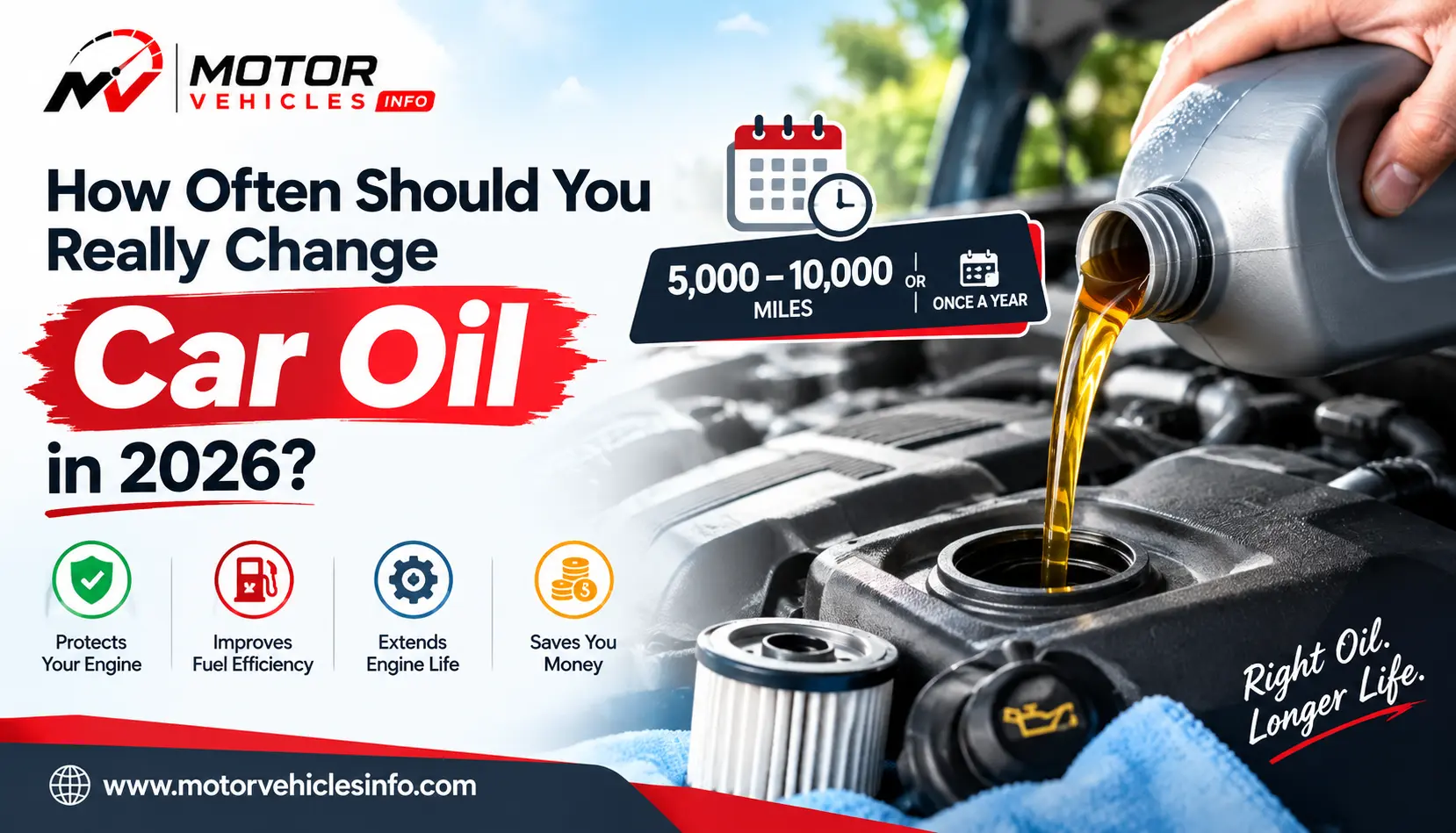
Let’s get the number out of the way. If your petrol car runs on modern synthetic oil, plan to change the oil every 5,000 to 7,500 miles, or once a year, whichever comes first. Plenty of newer engines stretch to 10,000. Older cars on conventional oil need love sooner.
| Oil type | Typical interval (miles) | Typical interval (km) | Time limit |
|---|---|---|---|
| Conventional | 3,000 to 5,000 | 5,000 to 8,000 | 6 months |
| Synthetic blend | 5,000 to 7,500 | 8,000 to 12,000 | 6 to 12 months |
| High-mileage | 5,000 to 7,500 | 8,000 to 12,000 | 6 to 12 months |
| Full synthetic | 7,500 to 10,000 | 12,000 to 16,000 | 12 months |
Treat these as ranges, not promises. Plenty of Australian logbooks, for example, say 10,000 to 15,000 km or 6 to 12 months.
Your manual gives a range, like 7,500 to 10,000 miles? Here’s a simple trick. Do mostly short trips? Use the lower number. Mostly highway cruising? Use the higher one. That alone tells you when to change car oil without agonising over it.
How Often Should You Change Your Oil? Three Things Decide
Oil type, driving style, and engine design. Each can add or shave thousands of miles off the schedule, as you’ll see below.
Is the 3,000-Mile Rule Dead? Why Modern Engines Go Longer
For most cars built in the last twenty years, yes. The rule was born in an era of looser engines and basic oil. Today’s engines are machined to tighter tolerances and burn cleaner, and the oil carries additives that fight heat and sludge. Better filters help, and so do oil life monitors, because the car now tracks how hard its oil has worked.
Carmakers have quietly moved the goalposts too. Plenty of manuals that once said 5,000 miles now say 10,000 or more. So before you change car oil on a habit your parents handed down, check what the book says today.
Why a Car Oil Change at 3,000 Miles Is Usually Too Soon
If you still change car oil every 3,000 miles on a newer car, you’re probably tossing out oil with plenty of life left. The exceptions? Old engines, heavy towing, and lots of short hops.
Synthetic vs Conventional vs High-Mileage Oil: How Oil Type Changes Your Interval
The synthetic oil vs conventional oil debate really comes down to stability. Synthetic handles heat and cold better. Conventional is cheaper but breaks down faster. A blend splits the difference. High-mileage oil adds seal conditioners, so it suits engines past roughly 75,000 miles.
Synthetic Oil vs Conventional Oil: Who Gets to Change Car Oil Less Often?
Synthetic, usually. It may cost $30 more at the counter, but you might need it once a year instead of twice. One warning, though. Don’t stretch past your manual’s limit just because the bottle makes big promises. Even when you change engine oil to a better type, the car’s own schedule still applies.
Normal vs Severe Driving: How Your Habits Shorten Oil Change Intervals
Plenty of drivers are “severe” users without knowing it. Most manuals count these as severe:
- Short trips under 10 miles, where the engine never fully warms up
- Stop-and-go traffic and long idling
- Towing or hauling heavy loads
- Dusty roads, extreme heat or deep cold
Picture a courier making 40 short stops a day. She ticks every box, so her van needs the shorter schedule, whatever the manual’s headline number says.
Now picture a retiree who drives 15 minutes to the shops twice a week. That’s severe use too, because the engine rarely gets hot enough to burn off moisture. For both of them, the smart move is to change engine oil by the calendar, not just the odometer.
Fleet Vehicles: When You Need to Change Car Oil More Often
Fleet and small-business managers, take note. Treat most delivery work as severe service. Log every oil change by date and mileage, and set reminders for whichever limit arrives first.
Mileage, Time or Oil Life Monitor: Which One Should You Follow?
Whichever comes first. Oil ages even in a parked car, because moisture and fuel residue slowly build up. An oil life monitor (OLM) estimates wear from engine temperature, revs, and trip length, and it’s usually the sharpest guide you’ve got. Trust it, but never go past a year.
Buying used? Ask for service receipts, and have a look at our vehicle history and registration guides before you hand over cash. Check for open recalls too, on a government site: NHTSA in the US, GOV.UK in the UK, or Vehicle Recalls in Australia.
What Type of Oil Does My Car Take? How to Find the Right Viscosity and Spec
“What type of oil does my car take?” Three places will tell you: the owner’s manual, the oil filler cap, and your carmaker’s website. For that last one, use the VIN, not the number plate. Our explainer on the difference between a VIN and a registration number shows why.
Reading 5W-30 and Oil Specs Before You Change Engine Oil
In 5W-30, the first number describes how the oil flows when cold, and the second describes thickness when hot. Match the viscosity first, then the spec (API, ACEA, or the maker’s own approval). The US government’s fuel economy site says the recommended grade can improve gas mileage by 1% to 2%, while the wrong grade can cost you about the same.
Hybrids, Turbocharged Engines and EVs: Do the Rules for Changing Engine Oil Differ?
A little, yes.
- Hybrids: The engine runs less, but short, cool runs let fuel and moisture sneak into the oil. Respect the time limit as much as the mileage.
- Turbocharged engines: Turbos run very hot. Use full synthetic and don’t push the interval.
- EVs: No engine, so no engine oil. They still need coolant, brake fluid and gearbox checks, and our electric vehicle coverage covers the details.
Turbo and Direct-Injection Engines: Change Car Oil on Schedule
Tired oil punishes turbo and direct-injection engines. If you own one, change car oil right on schedule, or even a touch early in hot climates.
Signs You Need an Oil Change Now, and What Happens If You Wait Too Long
Don’t wait for the warning light. Keep an eye out for these:
- Oil that looks black, gritty or thick on the dipstick
- An oil pressure or service light
- Ticking, knocking, or a louder engine
- A burning smell or blue-grey exhaust smoke
- A dipstick reading that’s low between services
Leave it too long, and sludge builds up, parts wear faster, and the engine runs hotter. At worst, it seizes, and a rebuild can run into thousands. A red oil light means stop driving and check the level straight away.
Expert Tips for Every Car Oil Change
- Check the dipstick once a month, on level ground with a cool engine.
- Stick a reminder on the windscreen, but trust the car’s own monitor if it has one.
- Buy the filter and oil together, so the spec matches.
- Keep a note on your phone with every service date.
- Towing or driving in extreme heat? Change car oil earlier than the headline number.
Common Mistakes When You Change Car Oil
- Using the wrong viscosity because it was on sale
- Forgetting a new filter and sump washer
- Overfilling, which can foam the oil
- Skipping the service record
- Ignoring time limits on a low-mileage car
How to Change Car Oil Yourself: Step-by-Step DIY Oil Change Guide
Doing it at home saves money and teaches you about your car. The FTC notes that choosing an independent shop or doing the work yourself is your right, and a company can’t simply void a warranty for that.
How to Do an Oil Change: Tools You Need
You’ll need the right oil, a new filter, a drain pan, a socket set, a filter wrench, a funnel, jack stands or ramps, gloves and some rags.
Step-by-Step: How to Change the Oil
- Warm the engine for a few minutes, then switch it off.
- Lift the car safely on ramps or stands. Never trust a jack alone.
- Slide the drain pan under the sump and remove the drain plug.
- Let the old oil drain fully.
- Swap the filter, and wet the new gasket with fresh oil.
- Refit the drain plug with a new washer.
- Pour in the correct amount through the filler.
- Run the engine for a minute, then recheck the dipstick.
- Write down the date and mileage.
Take the used oil to a recycling point. Never pour it down a drain.
A few safety notes before you start. Hot oil burns, so let it cool for ten minutes. Wear gloves, because used oil isn’t kind to skin. And if you’ve never done this before, ask a handy friend to watch your first time. The job is simple, but the details matter.
Oil Change Cost in 2026: DIY vs Quick-Lube vs Dealer vs Mobile (and How to Protect Your Warranty)
Oil change cost varies by region, oil type and engine size. These ballpark US figures for full synthetic show how the options stack up. Get a written quote first.
| Option | Typical cost | Best for | Watch out for |
|---|---|---|---|
| DIY | $30 to $70 | Confident home mechanics | Tools, time, disposal |
| Quick-lube | $50 to $110 | Speed and price | Upsells, wrong oil grade |
| Dealer | $90 to $150 | Warranty peace of mind | Highest price |
| Mobile mechanic | $80 to $140 | Busy schedules | Check their credentials |
Quick-lube shops often advertise a low price, then add a filter fee, a disposal fee and a long list of extras. Ask exactly what the oil change cost includes before you hand over the keys, and say no to flushes your manual doesn’t call for.
Protect Your Warranty When You Change Engine Oil
Keep receipts, use oil that meets the manual’s spec, and record the date and mileage. In Australia, the ACCC confirms that you can choose an independent repairer, and manufacturers must share service information. Follow the logbook’s requirements too.
FAQs
How often should you change your oil with full synthetic?
Most full synthetic oils last 7,500 to 10,000 miles or one year. Your manual’s number comes first.
Is it bad to car oil change too early?
It won’t harm the engine. It just wastes money and oil. A few hundred miles early is harmless.
How long can a car go without an oil change?
Not long past the limit. Going a few weeks or 1,000 miles over once rarely hurts, but regular delays shorten engine life.
What does it typically cost to change car oil?
About $30 to $70 for DIY and $50 to $150 for a shop, depending on oil type and where you live.
What type of oil does my car take?
Check the manual or filler cap, or look up your VIN on the carmaker’s site for the exact viscosity and spec.
Can I change engine oil myself without voiding my warranty?
Yes, in general. Use the right oil, follow the schedule, and keep dated receipts and records.
Do electric cars need you to change engine oil?
No engine oil, because there’s no combustion engine. They still need other fluid checks.
Should I change car oil by miles or by months?
Use both. Whichever limit arrives first is the date to book the service.
What happens if I change car oil with the wrong viscosity?
A small mismatch rarely destroys an engine, but it can hurt fuel economy and protection. Drain it and refill with the right grade at the next opportunity.
How do I know when to change engine oil on a low-mileage car?
Go by time. If you drive less than 5,000 miles a year, change engine oil at least once every 12 months, or every 6 if your manual says so.
Final Thoughts
So, how often should you change car oil? For most modern cars, every 5,000 to 10,000 miles or once a year, shortened by severe driving and guided by your manual. Use the right oil, keep records, and don’t ignore the warning signs.
The real secret is boring: a regular schedule beats a perfect one. A car oil change done on time, with the right oil and a fresh filter, protects the most expensive part of your car for pennies a day. Do it in your driveway or pay a shop; the habit is what keeps the engine healthy.
Pull out your owner’s manual tonight, find your oil change interval, and put the next service date in your calendar. For more practical help with buying, registering, and maintaining vehicles, visit Motor Vehicles Info.