The Volkswagen Tiguan eHybrid is one of the most talked-about plug-in hybrid SUVs (PHEV) on the market right now. It promises the everyday practicality of a family SUV with the running costs of an EV — and Volkswagen has clearly worked hard to make the Tiguan eHybrid feel like a “no-compromise” hybrid rather than a half-measure.
In this review, we’ll break down the Volkswagen Tiguan eHybrid’s design, electric range, performance figures, interior technology, driving modes, safety scores, and pricing, so you can decide whether it deserves a spot in your driveway.
Quick Overview: Why the Tiguan eHybrid Stands Out
Before we go section by section, here’s why the Tiguan eHybrid keeps showing up on shortlists for buyers cross-shopping plug-in hybrid SUVs:
- Up to 272 horsepower combined output from the TSI engine and electric motor
- Roughly 100 km of pure electric range on a full charge, enough for most daily commutes
- Fuel economy figures as low as 1.6L/100 km when the battery is charged regularly
- A 15-inch infotainment touchscreen with the latest MIB4 software
- Available 4MOTION all-wheel drive for buyers who need extra traction
If you’re comparing PHEV SUVs, the Tiguan eHybrid is worth cross-referencing with our other guides — for example, our breakdown of how to check a used car’s history before buying is useful once you’re ready to shop the used-hybrid market.
1. Exterior Design: A Stylish Hybrid SUV With a Modern Touch
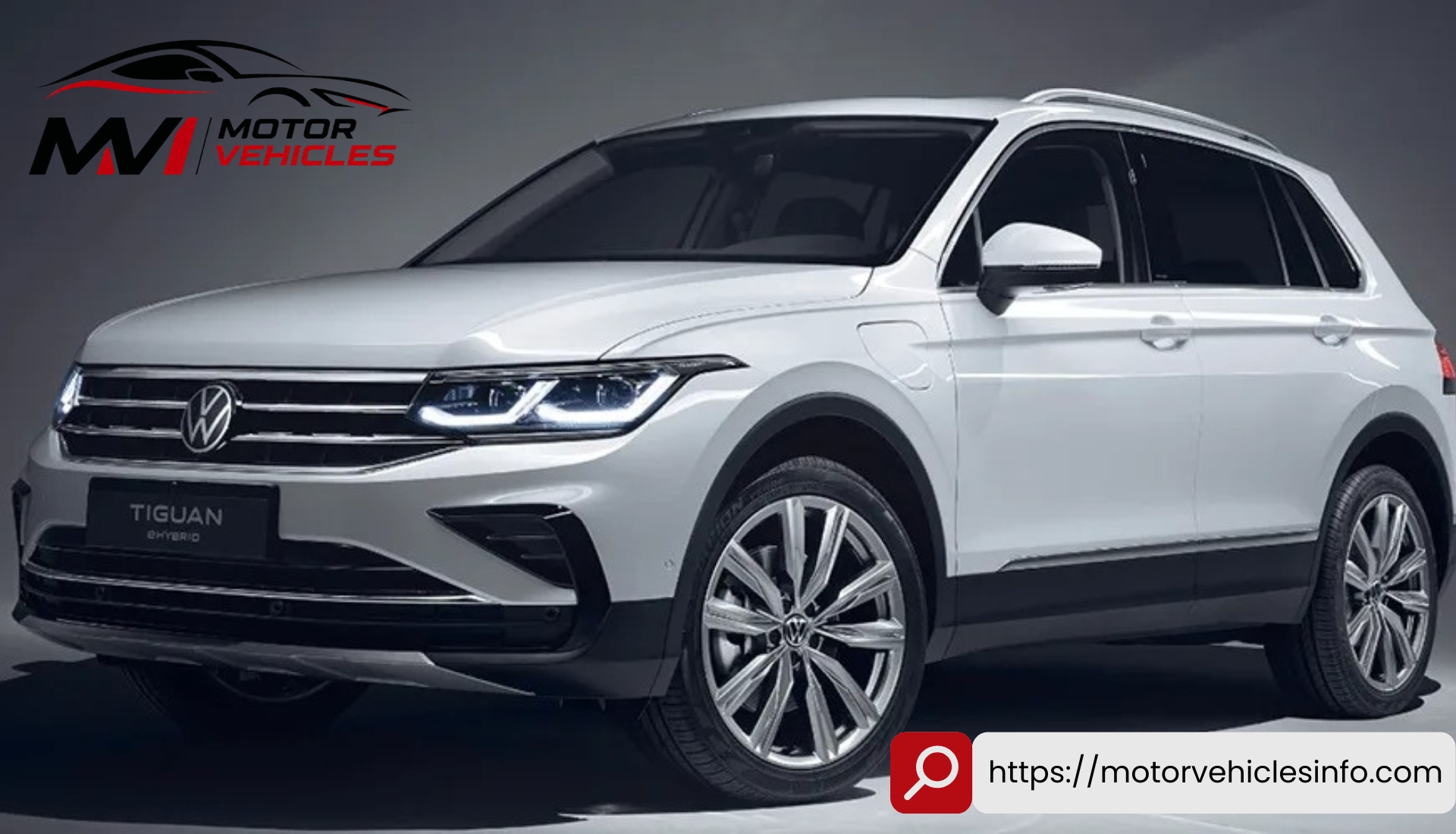
The Volkswagen Tiguan eHybrid keeps the sleek, contemporary silhouette of the latest Tiguan generation while adding a few visual cues that signal its electrified drivetrain.
Key exterior highlights:
- A bold front grille with an integrated LED light strip for a more futuristic face
- IQ.LIGHT Matrix LED headlights that adapt automatically for better night visibility
- Aerodynamic alloy wheels ranging from 17 to 20 inches
- Blue “eHybrid” badging on the rear and front fenders to mark it out as a plug-in model
- A sculpted body designed to reduce drag and improve overall efficiency
The result is an SUV that looks premium without shouting about its hybrid status — a look Volkswagen has refined across its wider electrified lineup, which you can browse on the official Volkswagen website.
2. Interior and Comfort: A High-Tech, Spacious Cabin
Step inside the Tiguan eHybrid and the cabin feels every bit as modern as the exterior suggests.
Interior highlights:
- A 10.25-inch Digital Cockpit Pro instrument cluster for clear, at-a-glance data
- A 15-inch touchscreen infotainment system running the latest MIB4 software with Apple CarPlay and Android Auto support
- 30-colour ambient lighting to personalise the cabin mood
- Heated and ventilated sports seats for year-round comfort
- A panoramic sunroof that opens up the cabin visually
Rear-seat passengers get generous legroom, which makes the Tiguan eHybrid a genuinely practical choice for families and long road trips, not just short commutes.
3. Performance and Hybrid System: Efficient Yet Powerful
At the heart of the Volkswagen Tiguan eHybrid is a plug-in hybrid drivetrain that pairs a turbocharged petrol engine with an electric motor.
Engine and performance specs:
| Spec | Detail |
|---|---|
| Powertrain | 1.5L TSI turbo petrol + electric motor |
| Combined output | Up to 272 hp |
| Drivetrain | FWD standard, optional 4MOTION AWD |
| Transmission | 6-speed DSG automatic |
| 0–100 km/h | Around 7 seconds |
| Fuel consumption | As low as 1.6L/100 km |
| Electric range | Up to 100 km on a full charge |
One of the standout features is the Tiguan eHybrid’s ability to run purely on electric power for short trips, keeping daily commutes essentially emission-free. For readers unfamiliar with how plug-in hybrids differ from full hybrids and EVs, the U.S. Department of Energy has a clear explainer on how plug-in hybrid electric vehicles work.
4. Driving Modes: Versatility for Every Situation
The Tiguan eHybrid offers multiple driving modes so you can match the power source to the situation:
- EV Mode – 100% electric power, ideal for short city trips within the ~100 km electric range
- Hybrid Mode – automatically balances petrol and electric power for maximum efficiency
- Battery Hold Mode – preserves battery charge for later, useful in low-emission zones
- Sport Mode – combines both power sources for maximum acceleration
This flexibility means owners can optimise for either running costs or performance depending on the drive ahead — a genuinely practical feature rather than a marketing gimmick.
5. Safety and Driver Assistance
Safety is a major consideration for any family SUV, and the Tiguan eHybrid comes with a full suite of driver-assistance systems, including adaptive cruise control, lane-keeping assist, and automatic emergency braking. For buyers who want independently verified crash-test data rather than manufacturer claims, Euro NCAP’s official safety ratings are the most reliable third-party source to check before you buy.
6. Pricing and Where the Tiguan eHybrid Fits
Pricing for the Volkswagen Tiguan eHybrid varies by trim, region, and available incentives for plug-in hybrids, so it’s worth checking current configurations directly on Volkswagen’s official site linked above. Compared with rivals in the compact PHEV SUV segment, the Tiguan eHybrid tends to sit in the mid-to-premium range, justified by its interior tech, electric range, and available all-wheel drive.
If you’re weighing a new Tiguan eHybrid against a used alternative, it’s also worth reading our guide on spotting a flood-damaged car before you get scammed — useful due diligence no matter which SUV you end up choosing.
Volkswagen Tiguan eHybrid FAQ
1. What is the electric range of the Volkswagen Tiguan eHybrid?
The Volkswagen Tiguan eHybrid uses a 19.7 kWh battery and offers an official WLTP electric-only range of up to around 100–120 km (roughly 72–77 miles), depending on the trim and engine output (204 PS or 272 PS). Real-world range is typically a little lower, especially in cold weather or on motorways, so most owners see closer to 60–90 km per charge in everyday driving.
2. How much does the Volkswagen Tiguan eHybrid cost?
Pricing for the Volkswagen Tiguan eHybrid varies by market and trim level. In Europe, entry-level eHybrid models typically start from around €48,000–€49,000, while in the UK prices start from roughly £42,000 for the “Life” trim and can rise toward £60,000 for fully-loaded R-Line versions. Always check Volkswagen’s official configurator for current pricing in your region, since incentives and trim availability change frequently.
3. How long does it take to charge the Volkswagen Tiguan eHybrid?
Charging time depends on the onboard charger. With a standard home wallbox, the Tiguan eHybrid’s battery typically takes around 2–4 hours for a full charge, while a regular domestic socket can take longer. This makes overnight charging the most practical option for most owners, letting the battery be fully topped up before the next day’s commute.
4. Is the Volkswagen Tiguan eHybrid worth buying over the regular Tiguan?
For drivers who can charge regularly at home or work and mostly do shorter daily trips, the Volkswagen Tiguan eHybrid is worth the premium — it offers near-EV running costs, lower company-car tax in many markets, and stronger combined power (up to 272 hp) than the standard petrol or diesel Tiguan. If you rarely have charging access or drive long distances daily, a mild-hybrid or diesel Tiguan may be more cost-effective.
5. What is the real-world fuel economy of the Volkswagen Tiguan eHybrid?
Official WLTP figures for the Tiguan eHybrid claim exceptionally high mpg (in the hundreds), but these numbers assume the car is driven mostly on electric power with regular charging. In real-world mixed driving without frequent charging, most owners report fuel economy closer to 35–45 mpg (roughly 6–7 L/100 km) once the battery is depleted, which is still competitive for a 272 hp SUV.
Final Verdict: Is the Volkswagen Tiguan eHybrid Worth It?
The Volkswagen Tiguan eHybrid succeeds at what it sets out to do: deliver a stylish, spacious, and genuinely efficient plug-in hybrid SUV without asking buyers to compromise on power or comfort. With up to 100 km of electric range, 272 hp on tap, and a well-equipped, tech-forward cabin, it’s a strong option for anyone shifting from a conventional SUV toward electrification without going fully electric just yet.
For more car buying guides and EV comparisons, browse our Cars section and EV category.