You’re out driving down the road when that pesky amber icon lights up on your dashboard. Your heart sinks a little bit inside. Do you have to fix your car now, and if so, is this an easy $40 fix or something much more expensive? Well, here is the truth: a check engine light can mean just about anything from forgetting to tighten the gas cap to a malfunction that will end up costing you thousands of dollars. This is the point where you need to know which is which – and this article will help.
Below is an extensive list of reasons why your check engine light may be on, sorted from “no need to panic” to “stop driving now.” We will talk about how you can distinguish between the check engine light and the tire pressure light, what you should do if the check engine light is flashing, and how to use the check engine light reader.
What Does the Check Engine Light Actually Mean?
The Check Engine light is an integral part of the on-board diagnostics system of your car, which is also known as OBD-II. All gas-fueled cars manufactured after 1996 have an OBD-II system in place, and its only purpose is to monitor about 40 different sensors connected to your engine and emission system. As soon as any one of these sensors gives out any reading that is out of range, a diagnostic trouble code is recorded by the computer of your car and the light illuminates on the dashboard.
All the check engine light does is inform you. The light itself will not give any indication about the problem but will only let you know that there is a problem and will keep a record in the form of codes which can be translated by a mechanic or a check engine light reader. As per the explanation of On-Board Diagnostics given by the Nevada DMV, the OBD system may detect a faulty component before the driver even notices any difference in driving of the vehicle.
Because the check engine light covers such a wide range of issues, the same amber icon might mean a $15 gas cap or a $2,000 catalytic converter. That’s the frustrating part, and it’s also why so many drivers panic the moment it appears. If you’ve recently had work done on your vehicle or you’re weighing whether an existing recall might be the trigger, it’s worth checking your automaker’s official recall list, since some safety recalls — like the one covered in our Subaru recall breakdown — can affect systems that trip the check engine light too.
Check Engine Light On, But Car Runs Fine? Here’s Why That Happens
This is one of the most common questions drivers ask, and it makes sense. If nothing feels different, why would the check engine light be on?
The answer comes back to how the OBD-II system works. It’s monitoring things you can’t feel — oxygen levels in the exhaust, fuel trim percentages, evaporative emissions pressure, catalytic converter efficiency. None of that shows up as a bump, noise, or smell. Your engine can run completely fine on the surface while a sensor quietly reports numbers that are slightly off.
A few reasons the check engine light comes on with no noticeable symptoms:
- A loose or failing gas cap seal (extremely common, and totally harmless in the short term)
- An aging oxygen sensor that’s still functional but reporting outside its normal range
- A software-level glitch after a battery disconnect or a cold snap
- An evaporative emissions (EVAP) leak too small to affect performance
The takeaway: “the car runs fine” doesn’t mean “ignore it.” It just means you probably have some time to get it checked out without panicking. That said, don’t let time turn into months — small issues like this tend to get more expensive the longer they sit.
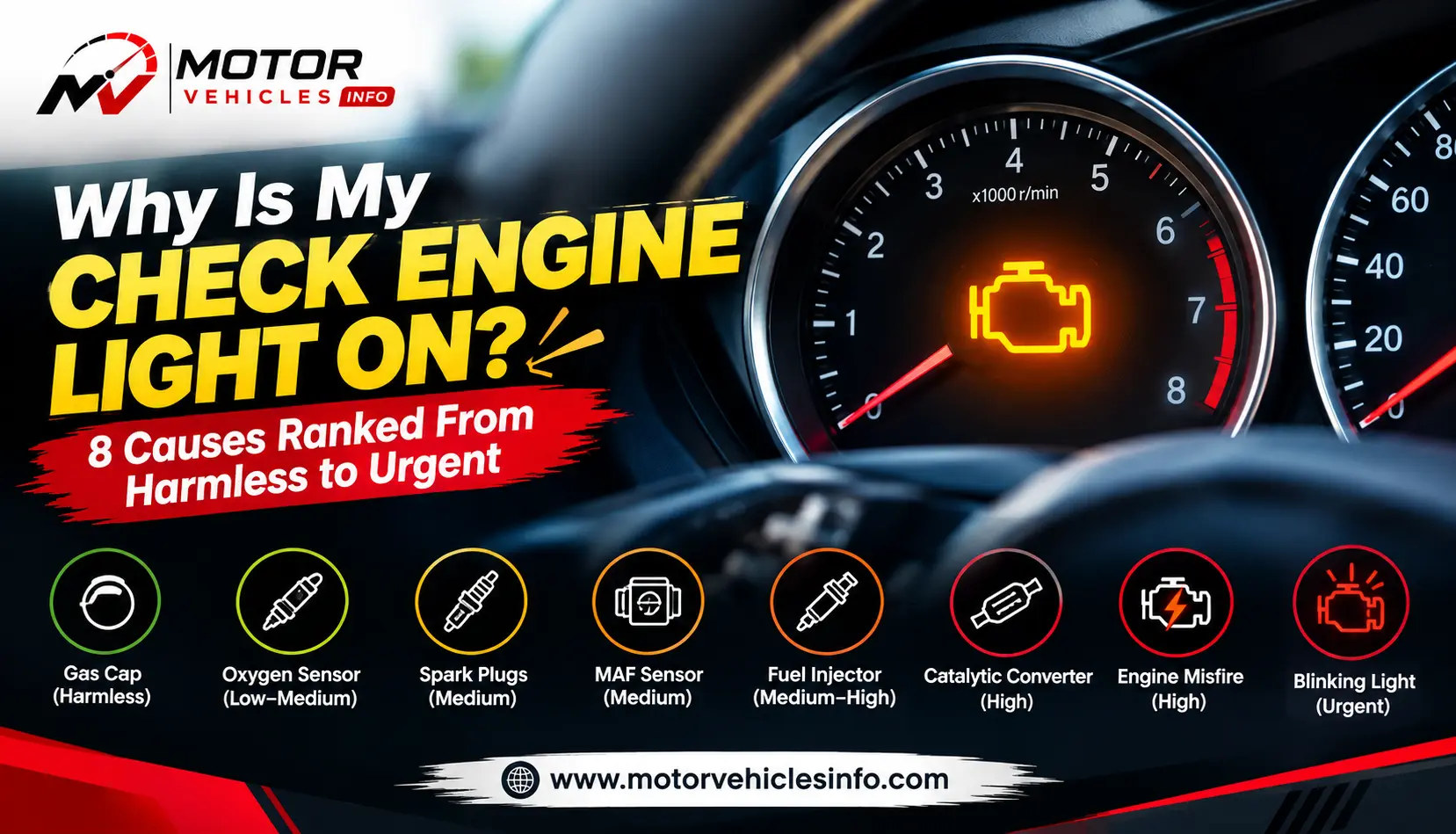
8 Causes of the Check Engine Light, Ranked From Harmless to Urgent
Here’s the ranked list drivers actually search for. We’ve ordered these from the cheapest, most harmless triggers up to the ones that can seriously damage your engine if ignored.
1. Loose or Damaged Gas Cap
This is the classic “false alarm” that gives the check engine light its reputation. Your fuel system is sealed and pressurized, and a loose, cracked, or missing gas cap lets that pressure escape. The EVAP system notices the drop and flags it.
Fix: Tighten the cap until it clicks three times, then drive for a day or two. If the check engine light doesn’t turn off on its own, replace the cap — they’re inexpensive.
2. Oxygen (O2) Sensor Issue
The O2 sensor measures how much unburned oxygen is in your exhaust, which your engine’s computer uses to balance the fuel mixture. A worn sensor throws that balance off, hurting fuel economy but rarely causing immediate damage.
Fix: Replacement is straightforward and moderately priced. Left alone for too long, though, a bad O2 sensor can damage your catalytic converter — which is a much pricier repair.
3. Worn Spark Plugs or Ignition Coils
The spark plugs fire off the air/fuel mixture in each cylinder. The problem will be evident through rough idling, hesitation, or slightly poor fuel economy in addition to the check engine light.
Fix: Spark plugs are a part of your car’s regular maintenance service and should be changed after 30,000 to 100,000 miles, according to the spark plugs. Neglecting your spark plugs will soon result in a misfire, making the problem a more serious one.
4. Faulty Mass Airflow (MAF) Sensor
The MAF sensor measures how much air is entering the engine, which directly affects the fuel mixture. A dirty or failing sensor can cause rough idling, stalling, or reduced power.
Fix: Sometimes a simple MAF sensor cleaning solves the problem. If it’s actually failed, replacement is needed. Either way, this one’s worth addressing promptly since it affects both performance and fuel economy.
5. Loose or Damaged Fuel Injector
Fuel injectors deliver a precise, timed spray of fuel into each cylinder. A clogged or leaking injector throws off that timing and can cause misfires, rough running, or a noticeable drop in power.
Fix: Cleaning can resolve minor clogs, but a failed injector needs replacement. This isn’t a “wait and see” repair — a leaking injector is a fire risk in rare cases and a fuel-waster in every case.
6. Catalytic Converter Failure
The catalytic converter turns harmful exhaust gases into less harmful ones before they exit the tailpipe. It’s also one of the more expensive parts on your car, and it often fails as a downstream result of an ignored O2 sensor or spark plug issue — which is exactly why the two earlier causes on this list matter so much.
Fix: This is a job for a shop, and it’s not cheap. Catching the root cause (worn plugs, a bad sensor) early is the best way to avoid ever reaching this point.
7. Engine Misfire
A misfire happens when one or more cylinders aren’t firing correctly — often from worn plugs, failing coils, or a vacuum leak. You’ll usually feel this one: jerking, stumbling, or a rough, uneven idle.
Fix: This needs prompt diagnosis. A misfire that continues unchecked can dump unburned fuel into the exhaust system, overheating and destroying the catalytic converter within a short drive.
8. Blinking or Flashing Check Engine Light (Severe Misfire)
This is the top of the urgency list, and it deserves its own explanation below. A blinking check engine light almost always means an active, severe misfire that’s sending raw fuel into your exhaust system in real time.
Fix: Stop driving as soon as you can safely pull over. This is the one scenario on this list where continuing to drive can cause immediate, expensive damage within minutes, not weeks.
Check Engine Light Blinking or Flashing? Why That Changes Everything
There’s a real difference between a steady check engine light and one that’s blinking or flashing, and it’s not just cosmetic.
A steady light means the computer detected a problem, logged it, and is letting you know on its own timeline. A check engine light that’s blinking or flashing means the computer detected something happening right now that could cause damage — almost always a severe engine misfire.
When a cylinder misfires repeatedly, unburned fuel gets pushed into the exhaust system instead of being burned in the engine. That raw fuel hits the catalytic converter, where temperatures can spike high enough to melt the converter’s internal structure. What might have been a $200 spark plug fix can turn into a $2,000 converter replacement in the time it takes to drive across town.
If your check engine light is flashing:
- Reduce your speed and avoid heavy acceleration.
- Get to a safe place to stop as soon as possible.
- Turn off the engine and call for a tow or roadside assistance rather than continuing to drive.
This is the one situation where “just keep an eye on it” is bad advice. A check engine light blinking is your car’s way of saying the damage clock is already running.
Check Engine Light vs. Tire Pressure Light: How to Tell Them Apart
Drivers mix these two up constantly, and it’s an easy mistake — both are dashboard warning lights, both are often amber, and both can feel equally alarming the first time you see them.
Here’s the simple way to tell them apart:
- Check engine light: Usually shaped like an engine block outline, sometimes just says “CHECK ENGINE” or “SERVICE ENGINE SOON” in text.
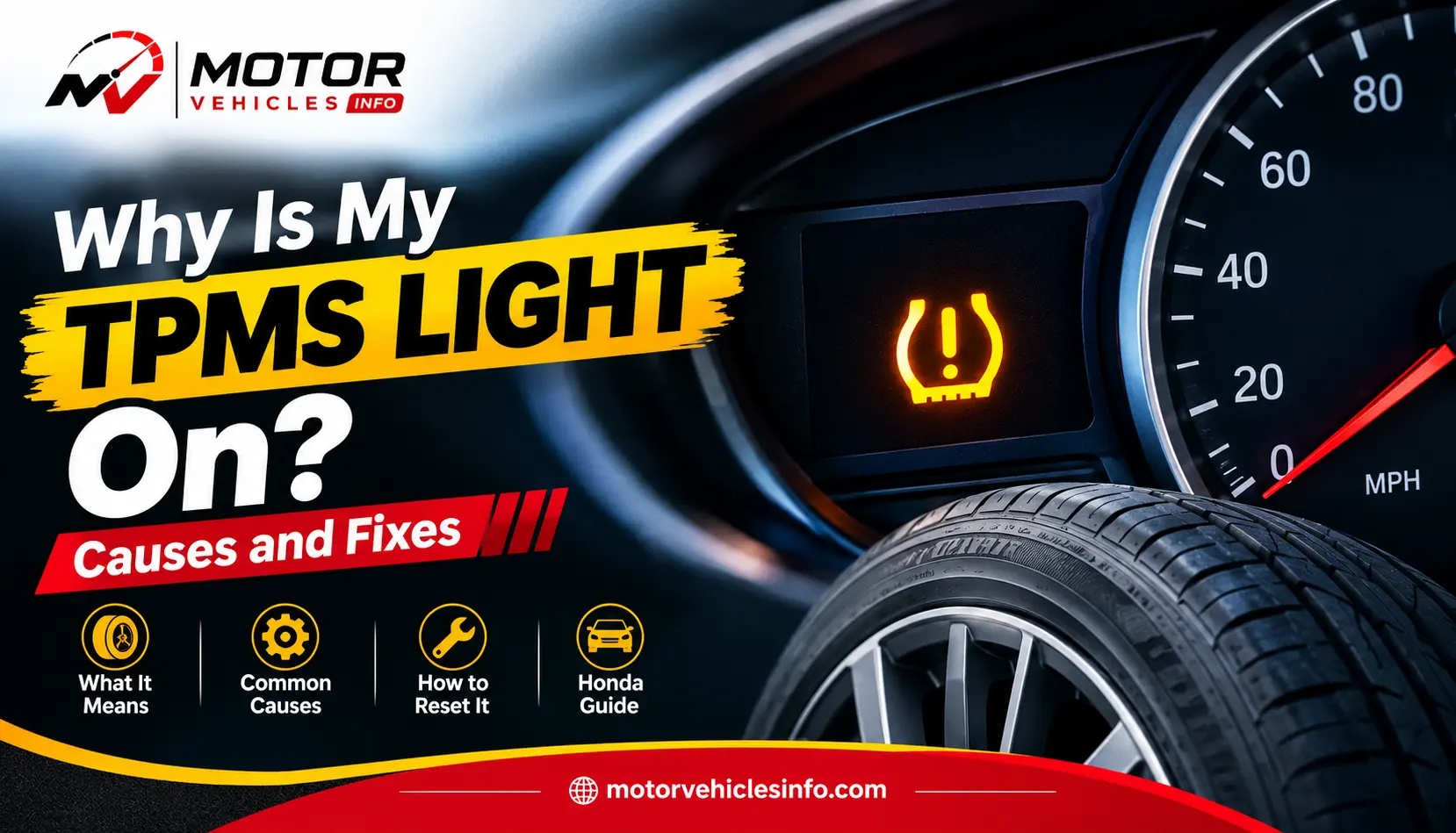
- Tire pressure light: Shaped like a tire cross-section with an exclamation point in the middle (sometimes called the TPMS light or low tire pressure light).
The check engine light relates to your engine, emissions, and related sensors. The tire pressure light — governed in the U.S. by federal tire pressure monitoring system requirements from the NHTSA — relates purely to the air pressure inside your tires. They’re triggered by completely separate systems and have nothing to do with each other, even though drivers often assume one caused the other.
One quick note: cold weather is a common reason the TPMS light turns on with no actual leak. Tire pressure drops roughly 1 psi for every 10-degree drop in outside temperature, which is often enough to trip the low tire pressure light on a chilly morning even if your tires are fine.
What to Do When Both the Check Engine and Tire Pressure Lights Are On
Seeing both lights at once naturally makes people assume the worst — that one massive problem is causing both. In reality, it’s almost always a coincidence: two unrelated systems happened to flag an issue around the same time.
Here’s the order to handle it:
- Check your tires first: This takes two minutes with a $10 gauge. If a tire is genuinely low, address that immediately since it’s the bigger near-term safety risk.
- Note whether the check engine light is steady or blinking: A blinking light takes priority over everything else — pull over.
- Use a check engine light reader to pull the stored trouble code so you (or your mechanic) know exactly what triggered it.
- Don’t assume they’re connected: Treat each warning light as its own issue unless a mechanic tells you otherwise.
The one exception: if you’ve recently had tire or wheel work done and both lights appeared right after, it’s worth mentioning to your mechanic, since a disconnected sensor during that service could plausibly affect both systems.
How to Use a Check Engine Light Reader to Diagnose the Problem Yourself
A check engine light reader — also called an OBD-II scanner — plugs into a port usually located under your steering column. Reading your own code takes about five minutes and can save you a diagnostic fee at the shop.
Step-by-step:
- Find the OBD-II port (a 16-pin trapezoidal connector, usually within a foot of the steering wheel).
- Turn the ignition to the “on” position without starting the engine (some readers need the engine running — check your reader’s instructions).
- Plug in the check engine light reader and let it connect.
- Select “read codes” from the menu.
- Write down the code (it’ll look like P0420 or P0301).
- Look up the code online or in the reader’s built-in database.
- Clear the code if you’ve made the repair, or leave it if you’re still diagnosing.
Basic Bluetooth check engine light readers that pair with a smartphone app now cost less than a tank of gas, and even big retailers will often read your code for free in the parking lot, as AutoZone explains in its guide to common check engine light causes. Just remember that a code points you toward the likely cause — it doesn’t always name the exact broken part, so some further diagnosis may still be needed.
Is It Safe to Keep Driving With the Check Engine Light On?
This depends entirely on whether the light is steady or blinking, and what symptoms you’re feeling alongside it.
Generally safe to drive a short while:
- Steady check engine light
- No unusual noises, smells, or performance changes
- Car feels normal to drive
Get it checked soon (days, not months):
- Steady light with mild symptoms — rough idle, slightly worse fuel economy, hesitation on acceleration
Stop driving as soon as safely possible:
- Check engine light blinking or flashing
- Strong fuel smell
- Loss of power, stalling, or visible smoke
- Any combination of the check engine light with a temperature or oil pressure warning
As Progressive notes in its overview of what the check engine light means, the light itself doesn’t tell you the severity — the behavior of the light (steady versus flashing) and how the car is running are your best clues until you can get a code read.
If you’re weighing whether an issue is worth diagnosing yourself or handing to a shop, browsing our full library of car maintenance guides is a good next step for symptom-specific troubleshooting.
Common Check Engine Light Triggers: Cost to Fix Each One
| Cause | Typical Repair Cost (USD) | Urgency |
| Loose or damaged gas cap | $10–$25 | Low |
| Oxygen (O2) sensor | $150–$400 | Low–Medium |
| Worn spark plugs or coils | $100–$400 | Medium |
| Mass airflow (MAF) sensor | $150–$400 | Medium |
| Fuel injector (single) | $250–$700 | Medium–High |
| Catalytic converter | $950–$2,500 | High |
| Engine misfire (diagnosis + repair) | $200–$1,000+ | High |
| Blinking check engine light (active misfire) | Varies widely; can exceed $2,000 if driven on | Urgent |
Prices vary by make, model, and region, so treat this as a ballpark rather than a quote. If you’re shopping for a used car and want to see whether a previous check engine light issue shows up in the service history, running the VIN through a Carfax alternative before you buy can flag past emissions-related repairs.
Practical Tips From the Shop Floor
- Check your gas cap first: It sounds too simple, but it resolves a genuinely large share of check engine light cases.
- Don’t clear the code before diagnosis: Clearing it might turn the light off temporarily, but the underlying problem — and the code that would help identify it — disappears too.
- Watch for patterns: If the check engine light comes on only after fueling up, cold starts, or highway driving, tell your mechanic — it narrows the diagnosis significantly.
- Keep a basic reader in your glovebox: For the price of a couple of coffees, you’ll never be guessing again.
- Address small issues fast: A worn spark plug is cheap. The catalytic converter damage it eventually causes is not.
Common Mistakes Drivers Make With the Check Engine Light
- Assuming it’s always serious: Panic-driving to the dealership for a $15 gas cap issue wastes time and money.
- Assuming it’s never serious: Ignoring a check engine light for months because “the car still runs fine” is how small issues become big repair bills.
- Confusing it with the tire pressure light: Different systems, different fixes — don’t let one distract you from the other.
- Continuing to drive on a blinking light: This is the single costliest mistake on this list.
- Disconnecting the battery to “reset” it: This clears the code without fixing anything, and the light will return once the underlying fault triggers again.
FAQs
Why is my check engine light on but my car seems fine?
The check engine light monitors sensors you can’t feel directly, like oxygen levels or evaporative emissions pressure. A minor issue, such as a loose gas cap or an aging sensor, can trigger the light with zero noticeable change in how the car drives.
Is a blinking check engine light an emergency?
Yes, practically speaking. A check engine light blinking or flashing usually signals an active engine misfire that can damage your catalytic converter within minutes of continued driving. Pull over safely and stop the engine rather than continuing your trip.
Can a loose gas cap really cause the check engine light to come on?
Yes, and it’s one of the most common reasons. Your fuel system relies on a sealed, pressurized cap, and a loose or cracked one lets that pressure escape, triggering an EVAP-related trouble code.
What’s the difference between the check engine light and the tire pressure light?
The check engine light relates to your engine and emissions system, while the tire pressure light (or TPMS light) relates only to low air pressure in one or more tires. They’re separate systems and are almost never connected to each other.
How much does it cost to get a check engine light read?
Many auto parts stores will read the code for free using a shop-owned scanner. A personal check engine light reader typically costs $20–$60 for a basic Bluetooth model, which pays for itself after one or two uses.
Should I keep driving if my check engine light is on but steady?
In most cases, yes, for a short period, as long as the car feels normal and you don’t notice new symptoms. Still, plan to get the code read within a few days rather than letting it sit indefinitely.
Can cold weather trigger the tire pressure light without a real leak?
Yes. Tire pressure drops as temperatures fall, and a cold morning is often enough to trip the low tire pressure light even without an actual puncture. Check your pressure with a gauge before assuming you have a leak.
Will a check engine light reader tell me exactly what’s broken?
Not always. It gives you a diagnostic trouble code that points toward the likely system or component, but further inspection is sometimes needed to confirm the exact part that failed.
Does ignoring the check engine light void my warranty?
It can, in some cases. If ignoring an active trouble code leads to a bigger failure that a repair record shows was preventable, some manufacturers may dispute a related warranty claim. Getting the light checked promptly protects both your car and your coverage.
Why does my check engine light come on right after I get gas?
This is almost always a gas cap issue. If the cap wasn’t tightened fully after refueling, the EVAP system detects the pressure drop and triggers the check engine light within one or two drive cycles.
Final Thoughts
A check engine light isn’t a verdict — it’s a starting point. Most of the time, it’s telling you about something minor and inexpensive, and the ranked list above should give you a realistic sense of where your situation likely falls. The one rule that matters more than any other: a steady check engine light deserves attention soon, but a check engine light that’s blinking or flashing deserves attention now.
Whether you handle it yourself with a check engine light reader or head straight to a trusted shop, as outlined by Jim Hudson Automotive Group’s guide to check engine light causes, the fastest way to peace of mind is simply finding out what the code says.
Don’t let that little amber light keep you guessing. Grab a check engine light reader, pull your code, and compare it against the causes above — or browse more practical guides like this one over on our car section to keep your vehicle running the way it should.