Ask an electric car shopper what actually keeps them up at night, and it’s rarely range or charging speed. It’s the EV battery replacement cost – that one number nobody wants to see on a repair invoice. Fair enough. A battery pack is the single most expensive part of an EV, and it doesn’t help that every few months another $20,000 horror story makes the rounds online.
The truth is, however, that the reality regarding EV battery replacement cost estimates for 2026 is much more peaceful than the headlines might have you believe. Most consumers never pay this expense directly. Failures during the warranty period are taken care of by warranty protection, while prices continue to fall as battery production becomes less expensive. What we will take a look at here is what a realistic EV battery replacement cost would be per car, and what makes this price higher or lower.
Key Takeaways
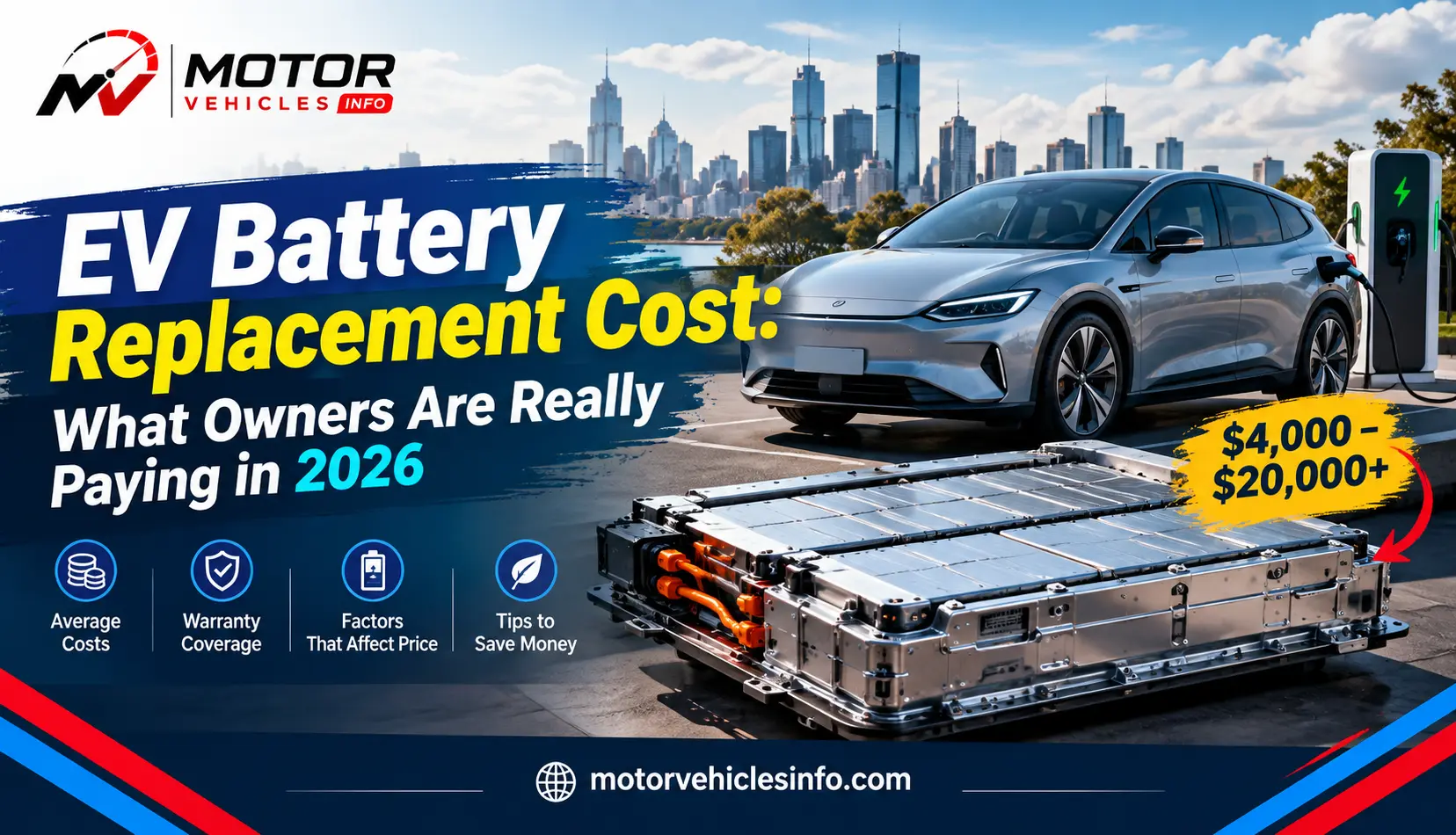
- Average EV battery replacement cost is estimated to be around $4,000 to $20,000 or more, depending on battery pack capacity and EV.
- The battery warranty of most EVs is 8 years or 100,000 miles, and it covers most of the early replacements without any extra costs.
- EV battery replacement cost from Tesla is higher than the average EV one – it is typically $13,000 to $20,000.
- Only a small percentage of EV drivers will need to pay for the replacement cost for their battery pack at all.
- Repairing individual modules, reconditioned packs, and recycling credit will help to reduce your actual cost of battery replacement.
- What Is the Actual EV Battery Replacement Cost in 2026?
What Is the Real EV Battery Replacement Cost in 2026?
Strip away the worst anecdotes, and the real EV battery replacement cost lands in a fairly predictable band. AAA puts a full pack swap at $5,000 to $20,000, give or take, depending on the make, model, and how much warranty coverage is left. Other outlets stretch that range a bit wider — closer to $4,000 for a small hatchback pack on the low end, and up past $25,000 for a large luxury SUV or truck pack on the high end.
Three things drive most of that spread: how big the pack is (measured in kWh), the brand’s labor rates, and whether the shop can get away with a smaller module-level repair instead of a full swap. The U.S. Department of Energy has tracked battery pack prices falling sharply over the past decade as cell manufacturing has scaled up — which is a big part of why the battery for EV models on the road today costs less to replace than a comparable pack did five years ago.
It’s worth separating the scary headline number from your actual odds, too. Replacement rates stay low across most tracked EV fleets, sitting in the low single digits as a share of vehicles, and a large chunk of those replacements happen under warranty at zero cost to the owner. If you’re weighing a used or new battery electric vehicle purchase, our full EV coverage is a decent next stop before you settle on a specific model.
How Much Do EV Batteries Cost by Size and Vehicle Type?
Your EV battery replacement cost comes down to what you drive. A small battery electric car with a 24–40 kWh pack costs nowhere near as much to replace as a full-size electric truck packing 130+ kWh. Edmunds puts the range anywhere from a few thousand dollars to more than $25,000, with model and battery capacity doing most of the work.
Here’s a rough sketch of what owners are seeing across common EV batteries by category:
| Vehicle Category | Example Models | Pack Size | Estimated Replacement Cost |
| Compact EV | Nissan Leaf, Mini Cooper SE | 24–40 kWh | 4,000–10,000 |
| Mid-size sedan/SUV | Tesla Model 3, Hyundai Ioniq 5 | 60–82 kWh | 8,000–16,000 |
| Luxury/long-range | Tesla Model S, BMW iX | 90–100+ kWh | 13,000–25,000+ |
| Electric truck | F-150 Lightning, Rivian R1T | 100–130+ kWh | 15,000–30,000+ |
The cost of labor will add another $1,000 to $3,000, depending on how difficult it is to remove the battery pack, whether the battery is integrated into the chassis, and the cost of labor at your local service center. Nickel-rich batteries and batteries with more cells will fall on the upper end of that range, while LFP batteries will often be found towards the lower end – which is why there is such great variance in EV battery replacement costs..
Tesla Battery Replacement Cost: What Owners Are Actually Paying
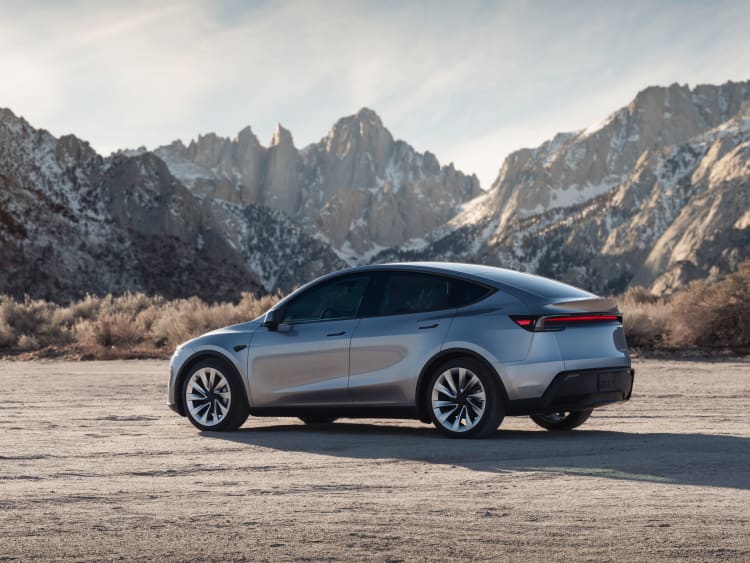
Tesla owns most of the U.S. EV market, so it makes sense that “how much are Tesla batteries” is one of the most searched questions around this whole topic. Real Tesla battery replacement cost figures run above the EV average — mostly because of pack size and Tesla’s structural battery designs on newer models.
Owners posting quotes online have reported Model 3 jobs landing between $10,000 and $15,000, while Model S and Model X packs — bigger, and often built into the car’s structure — have run $13,000 to $20,000 or more, based on figures compiled by Cars.com. A few older Model S owners have posted quotes north of $20,000 for an out-of-warranty upgrade, which is basically why Tesla battery replacement cost stories keep landing in the headlines.
Tesla does run its own replacement and refurbished-pack programs, and those can cut the Tesla battery replacement cost on a new-pack quote by thousands. If you’re eyeing a used Tesla specifically, ask for the battery’s state-of-health report before you buy it — that will tell you far more about your realistic Tesla battery replacement cost exposure than the odometer ever will.
Does Your EV Battery Warranty Cover the Replacement?
This is really the biggest factor in whether you ever see a full EV battery replacement cost hit your own wallet. The federal regulations mandate that all electric vehicles and battery electric vehicles have an 8-year or 100,000-mile warranty covering the high-voltage battery of these vehicles in the United States. However, some states such as California and other states that follow CARB regulations mandate an 8-year or 150,000-mile warranty covering a minimum of 70 percent capacity retention of the high-voltage battery.
Most manufacturer warranties define “failure” as either total loss of function or capacity dropping below a set line — usually 70%. In practice, that means normal, gradual degradation from age and mileage often isn’t enough on its own to trigger a covered replacement; you generally need to fall below the stated floor or run into an outright fault.
A handful of things can void or complicate that coverage: accident damage, unauthorized repairs, flood exposure, or aftermarket tinkering with the battery management system. If you’re buying used, always confirm how much of the original battery warranty carries over to a second owner — some brands pass it along in full, others prorate it, and that gap directly changes your own EV battery replacement cost exposure down the road.
Signs Your EV Battery Actually Needs Replacing
Not every range dip or dashboard warning means you’re staring down a full EV battery replacement cost. Genuine signs a pack actually needs attention usually look like:
- A noticeable, sustained drop in usable range, well beyond normal seasonal or cold-weather loss
- A battery warning light or reduced-power message that won’t clear after a restart
- Charging that stalls out before it finishes, or that’s suddenly much slower than usual
- Coolant leaks near the battery housing you can see or hear
- A state-of-health reading — through the manufacturer’s app or a diagnostic scan — that’s dropped sharply
If you’re noticing any of these, get a proper diagnostic from a certified EV technician before assuming you’re on the hook for a full EV battery replacement cost. A lot of “battery” symptoms actually trace back to a charging component, one faulty module, or a software glitch — all of which cost far less to fix than a full pack swap. Catching the problem early is often the whole difference between a modest repair bill and the full EV battery replacement cost.
How Insurance, Financing, and Extended Warranties Affect Your Cost
Your own EV battery replacement cost also depends on what’s covering the car beyond the factory battery warranty. If a battery gets damaged in a collision, your auto insurance — not the manufacturer — usually handles the claim, minus your deductible. Because EV batteries cost so much to replace, insurers will sometimes total a car with battery damage instead of authorizing repair, even when the rest of the vehicle is fine.
Extended warranties and vehicle service contracts are worth a look once the factory battery coverage runs out, especially if you plan to hang onto the car past year eight. Read the fine print, though — a lot of extended plans exclude gradual capacity loss and only kick in for sudden, total failure. Financing plays a role too, just less directly: a battery repair on a financed or leased EV can throw off your loan-to-value ratio if the EV battery replacement cost gets close to what the car is actually worth. It’s worth keeping an eye on broader automotive news, since warranty and insurance rules around EV batteries keep shifting as the market matures.
Does a Battery Replacement Affect Your EV’s Resale Value?
Oddly enough, a documented battery replacement can help resale value rather than hurt it, even accounting for the EV battery replacement cost involved — a fresh, full-capacity pack under a new warranty is a selling point on an older EV nearing the end of its original coverage, not a red flag. Buyers who’ve done their homework on EV battery replacement cost data for a specific model will often pay more, not less, for a car that already has a recent pack in it. What actually tanks resale value is uncertainty: buyers who can’t verify battery health tend to assume the worst and price their offer accordingly.
If you’re selling, get a battery health report and hang onto documentation of any pack work. If you’re buying, don’t just take the seller’s word for it — running a vehicle history check through a service like our guide to Carfax alternatives can help surface accident history or prior repairs tied to battery condition, even if it won’t show state-of-health directly.
DIY vs. Professional Replacement: What’s Actually Realistic?
Let’s be honest: trying to cut your EV battery replacement cost with a DIY job isn’t realistic for most owners, and it carries real risk. EV battery packs typically weigh 500 to 1,500 pounds, run at 400–800+ volts, and need specialized lifting gear, high-voltage safety training, and manufacturer-specific software to install and recalibrate correctly. This isn’t a weekend-garage job.
Professional replacement — through a dealer, an EV-certified independent shop, or a manufacturer service center — is really the only realistic path for a full pack swap, and it’s the only way to get an accurate quote for the job. Before any repair starts, it’s worth confirming the vehicle’s identity and service history are documented properly; comparing the VIN against the registration number is a simple way to make sure you’re working from accurate records, especially on a used vehicle. Where a shop offers it, module-level repair is usually the more realistic middle ground — it fixes one failed section instead of the whole assembly, and it typically costs a fraction of a full EV battery replacement cost.
Can You Recover Value from Your Old Battery? Trade-In and Recycling Credits
An old EV battery isn’t worthless just because it’s stopped meeting the car’s performance needs, and that leftover value can meaningfully offset your EV battery replacement cost. Depending on your shop and region, you might get a core credit for trading in the old pack when you buy a new one — think of it as a much bigger version of the old car-battery core charge.
Beyond trade-in credit, degraded EV batteries often get a second life in stationary energy storage before they’re finally recycled, and recyclers pull real value out of end-of-life packs in the form of lithium, cobalt, and nickel. Ask your service center directly whether a core credit or recycling rebate applies to your specific EV battery replacement cost quote — it’s not always offered upfront, but it’s frequently negotiable if you ask.
How to Reduce the Risk of Ever Paying for a Replacement
You can’t control every variable, but a handful of habits genuinely extend battery life and cut your odds of ever facing a full EV battery replacement cost:
- Avoid parking the battery at 100% charge for long stretches; most manufacturers suggest a daily limit around 80–90%.
- Go easy on frequent DC fast charging when Level 2 is a realistic option.
- Park somewhere temperate when you can — extreme heat and cold both speed up degradation.
- Keep up with manufacturer software updates, which often quietly improve battery management.
- Get an annual health check once the car passes the five-year mark — catching early degradation is far cheaper than an eventual replacement.
Common Mistakes Owners Make
- Assuming any range loss means the battery needs replacing, without getting a real diagnostic first
- Comparing raw quotes without asking whether module-level repair is even possible
- Letting warranty mileage slip by without tracking it, especially on high-mileage commuter EVs
- Skipping a battery health check before buying a used EV
- Overpaying for a repair without shopping the EV battery replacement cost quote around
- Ignoring how insurance total-loss thresholds interact with EV battery replacement cost on an older car
Frequently Asked Questions
What is the average EV battery replacement cost in 2026?
Most full pack replacements land between $5,000 and $20,000 — smaller compact EVs toward the low end, large luxury or truck packs toward the high end. Labor usually adds another $1,000 to $3,000 on top of parts.
How much are Tesla batteries to replace?
Tesla battery replacement cost figures generally start around $10,000 for a Model 3 pack and climb to $20,000 or more for larger Model S and Model X packs, going by owner-reported repair quotes.
Does every EV battery come with a warranty?
Yes. Federal rules require at least 8 years or 100,000 miles of coverage on the high-voltage battery in every electric vehicle sold in the U.S., with some states pushing that even longer — which is exactly why most owners never actually see the full EV battery replacement cost on an invoice.
How long do EV batteries actually last?
Most are built to outlast the rest of the car, with plenty of packs still performing well past 10–15 years, even though some gradual capacity loss is completely normal along the way.
Will my insurance cover an EV battery replacement cost after an accident?
Usually, yes, minus your deductible — collision-related battery damage typically falls under your auto insurance rather than the manufacturer’s warranty, so it rarely turns into an out-of-pocket EV battery replacement cost.
Can a damaged EV battery be repaired instead of replaced?
Often, yes. Module-level repair fixes a specific failed section of the pack and usually costs a lot less than a full EV battery replacement cost.
Does a battery replacement hurt resale value?
Not really — a documented, warrantied replacement tends to reassure buyers, and a transparent repair history is often seen as a plus rather than a minus. What actually hurts resale value is uncertainty about battery health, not a properly documented repair.
Is it ever worth replacing an EV battery on an older, low-value car?
Depends on the quote versus the car’s market value. If the EV battery replacement cost gets close to or exceeds what the car’s actually worth, most owners come out ahead exploring a trade-in or recycling credit instead of paying the full EV battery replacement cost.
How can I check an EV battery’s health before buying used?
Ask for a manufacturer state-of-health report if one’s available, and pair it with a full vehicle history check to rule out accident-related battery damage — both steps help you land on a realistic EV battery replacement cost estimate before you sign anything.
Final Thoughts
The EV battery replacement cost conversation is usually louder than it needs to be. Sure, a full pack swap is genuinely expensive, and Tesla battery replacement cost figures in particular can be eye-watering once you’re outside warranty. But the odds of ever paying that full price are low, coverage runs longer than most new owners expect, and prices keep trending down as manufacturing scales up. Knowing your specific vehicle’s warranty terms, pack size, and realistic replacement rate is the best defense against sticker shock down the road.
Thinking about buying an EV, or just trying to figure out what your current battery is really worth protecting? Browse our full library of vehicle guides and buying advice to make your next call with real numbers instead of headlines.